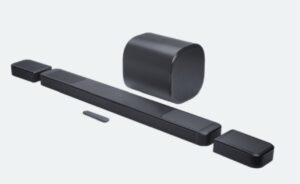
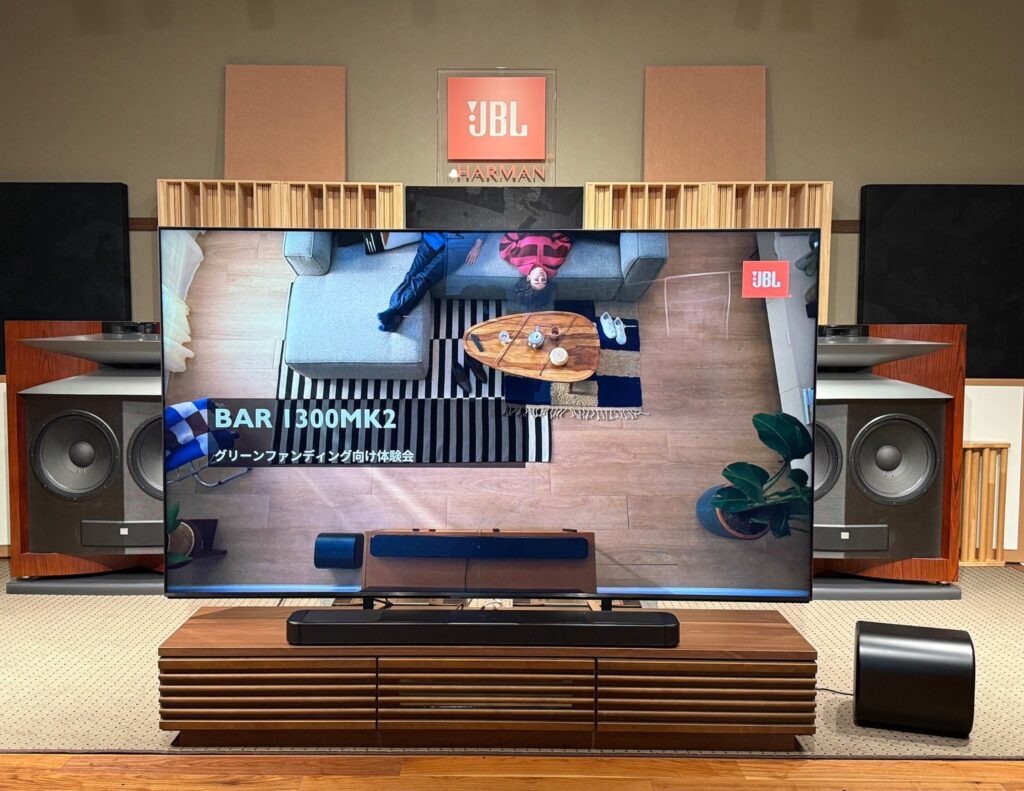
The JBL Bar 1300MK2 is its premium 11.1.4 Dolby Atmos/DTS:X soundbar. It is doubly impressive because it has two detachable rear 2.0.1 (4.0.2) forward, wide and upfiring speakers.
Let’s get techy because it’s the only way to understand the unique JBL Bar 1300MK2
There is no other soundbar remotely like it apart from its predecessor, JBL BAR 1300 – 1170 Watts, 11.1.4 Dolby Atmos soundbar, which was, and still is, impressive.
I have both the original 1300 and the MK2 here. The concept is similar, removable rear speakers, but the execution and new technology three years later make the new JBL Bar 1300MK2 quite a different soundbar. We won’t compare as the original is no longer available, and Harvey Norman has upset the competition by getting model exclusivity and offering the JBL Bar 1300MK2 at $1994 (normal RRP $2295).
No psychoacoustics (unless you want them)
Psychoacoustics is faux Dolby Atmos (DA), where all-in-one soundbars fool your ears into thinking that sound is coming from around, behind, or above you. To do this, they bounce sound off the ceiling and walls. That is fine if you have lower ceilings and close walls to bounce off – otherwise, you lessen or eliminate the effect. Not good!
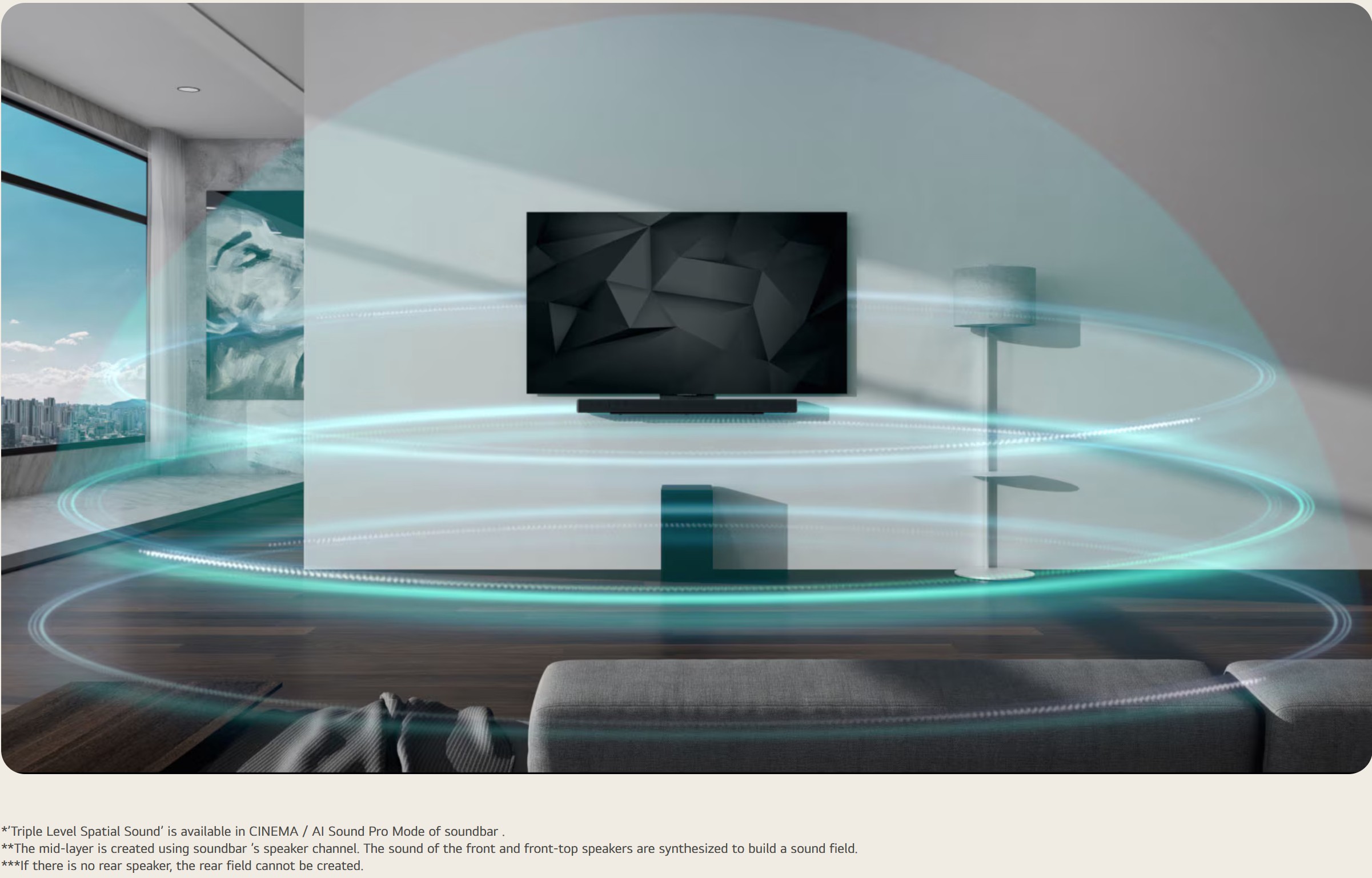
The JBL Bar 1300MK2 is a soundbar with detachable 2.0.1 rear left and right speakers (4.0.2). When detached and placed behind your listening position, you get forward-firing, surround side-firing and 3D up-firing height sounds—these complete the ‘real’ 3D Dolby Atmos (DA) immersive envelope.
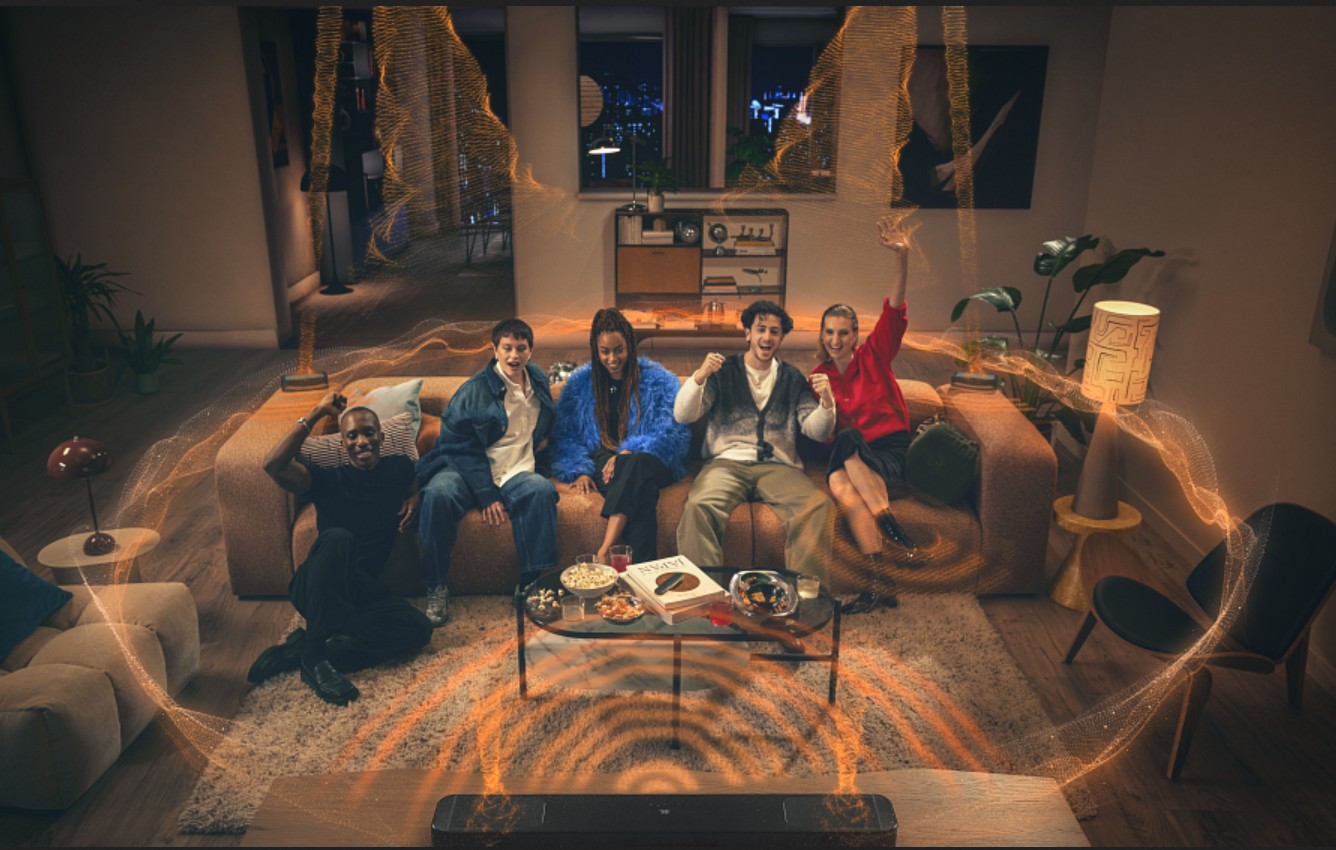
There is no substitute for dedicated rear, forward-firing, wide-firing (surround sound) and up-firing (DA) speakers.
Read Five tips for better TV sound – Dolby Atmos for beginners (2025 update guide) and How to buy a soundbar that meets your needs? (2025 update guide).
More techy stuff
JBL claim a total of 2470W, but that is Peak Watts, not sustained RMS Watts. The actual RMS is 1235 W at 1% THD, 65 more watts than the original 1300. It gives JBL a hell of a bragging right, although the total watts are spread over 29 speakers (I counted them all!). All watts mentioned in this review are peak.
This is an 11.1.4 DA/DTS:X soundbar. That means 11 discrete 2D (horizontal) channels, one sub and four 3D (height /spatial) channels.
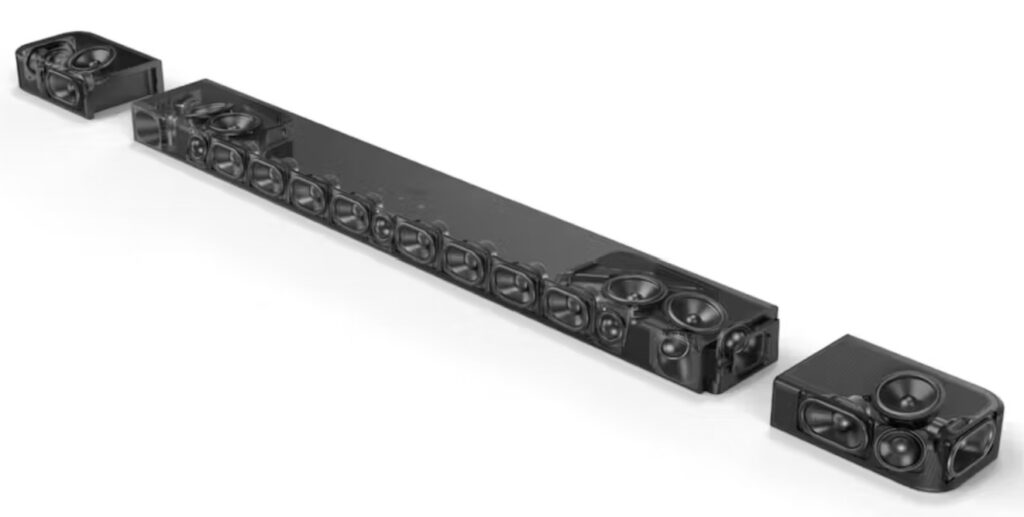
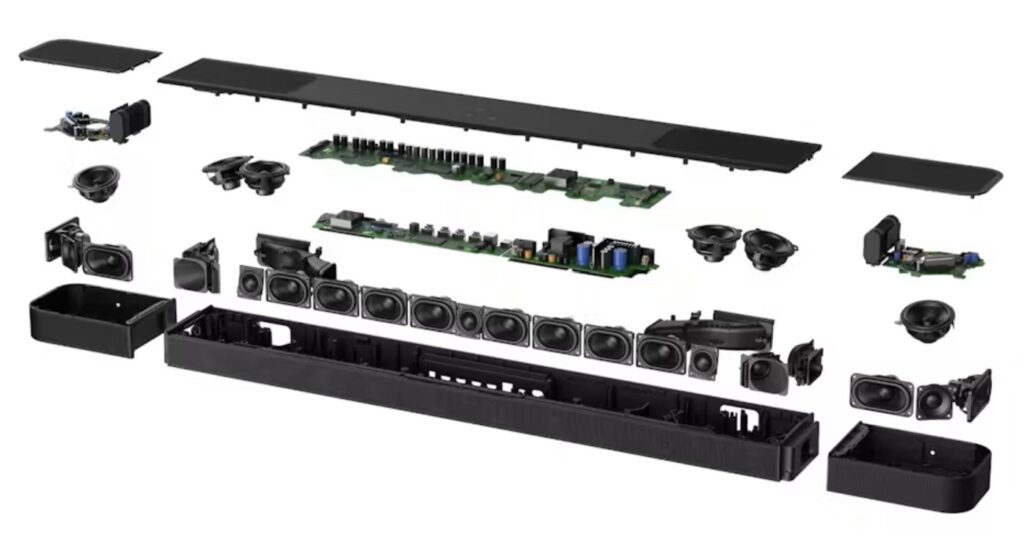
The soundbar has eight 50x75mm racetrack drivers, complemented by four 75mm full-range up-firing and seven 25mm tweeters in the main bar. This gives full range coverage from 33 Hz (low bass) to 20kHz (high treble). The bar spreads 950W over 7.0.2 as follows:
- Left front-firing (2 x 50x75mm racetrack drivers and 1 x 25mm Tweeter)
- Right front-firing (2 x 50x75mm racetrack drivers and 1 x 25mm Tweeter)
- Centre front firing dedicated voice channel (2 x 50x75mm racetrack drivers and 1 x 25mm Tweeter)
- Left side-firing (1 x 25mm Tweeter)
- Right side-firing ( 1 x 25mm Tweeter)
- Left wide-firing (1 x 50x75mm racetrack driver and 1 x 25mm Tweeter)
- Right wide-firing (1 x 50x75mm racetrack drivers 1 x 25mm Tweeter)
The use of two each race track drivers for Left and Right stereo and Centre voice allows it to phase a Dolby Sound object (move sound) far better than bars that use a single driver. The left, centre, and front tweeters are crossover-activated (not separate Dolby channels) to provide a full 20 kHz high treble experience.
Two rear passive radiators supplement these speakers, reinforce mid/upper bass.
The two detachable rear each 2.0.1 (total 4.0.2) speakers each spread 320W over:
- Left front-firing (1 x 50x90mm racetrack driver, 1 x 50mm full-range driver)
- Left side-firing ( 1 x 50×90-mm racetrack driver)
- Right front-firing (1 x 50x90mm racetrack driver, 1 x 50mm full-range driver)
- Right side-firing (1 x 50×90-mm racetrack driver, and 1 x 50mm full-range driver)
The four discrete 3D spatial X.X.4 are
- Left front upfiring (2 x 75mm up-firing full-range drivers for better phasing
- Right front upfiring (2 x 75mm up-firing full-range drivers for better phasing)
- Left rear upfiring (1 x 75mm up-firing full-range driver)
- Rear right up-firing (1 x 75mm up-firing full-range driver)
The X.1.X is the subwoofer that uses 2 x 200mm x 600W (1200W Peak) opposed subs (33 Hz to high bass cutover).
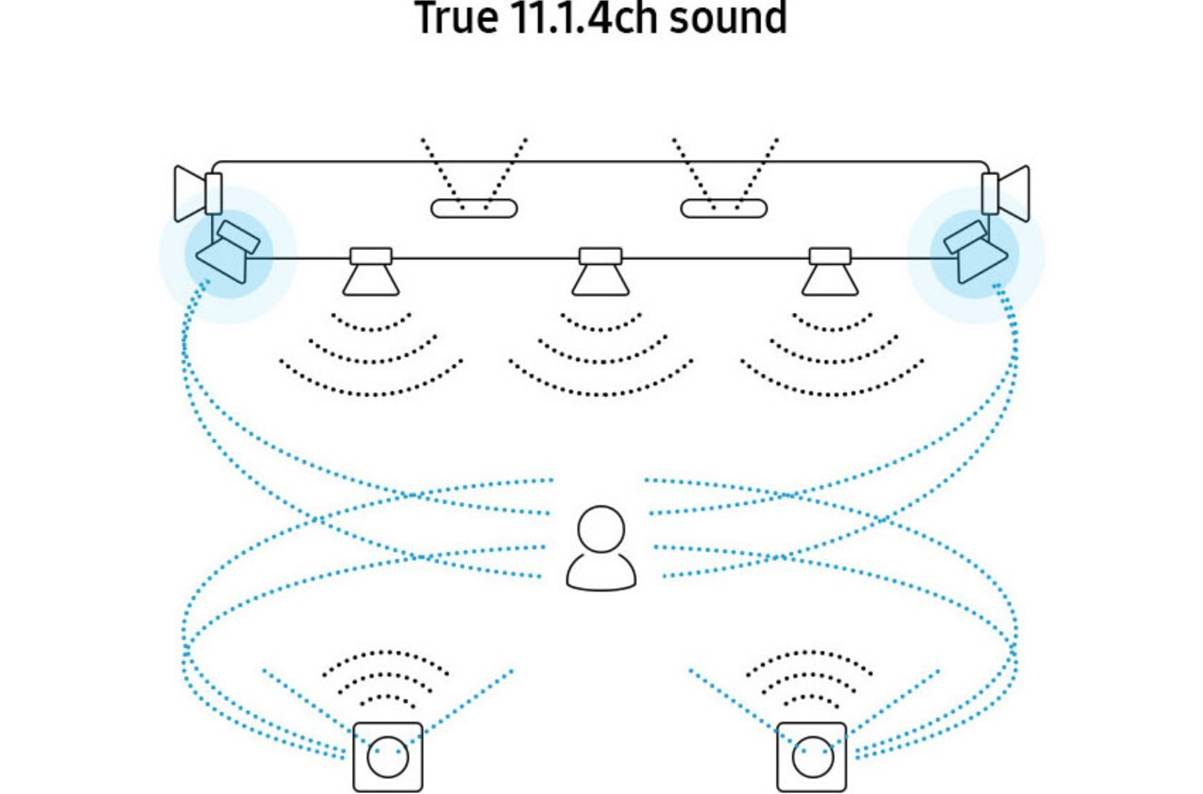
In our opinion, you can’t have realistic Dolby Atmos effects on less than 7.1.4, and this adds superior wide and side surround to the mix.
Australian Review: JBL Bar 1300MK2 Dolby Atmos and DTS:X 11.1.4 soundbar as at 11/11/25
Note: Our review is a pre-release unit, Hardware Version 3.0. We don’t expect any significant changes. App version 2.1.16.
| Website | JBL AU Website Product Page Manual Quick Start guide |
| Price | $2,299.95 but seen at Harvey Norman for $1994 |
| From | JBL Online, Harvey Norman |
| Warranty | 2-year ACL (Details) |
| Made in | China |
| Company | JBL (founded in the mid-40s) is short for James B. Lansing. (Yes, he was the Lansing in Altec Lansing.) It is now part of the Harman group of companies owned by Samsung. |
| More | I’mTech JBL news and reviews |
Ratings
We use the following ratings for many of the items below. I’mTech regards a score between 70 and 80/100 as a fit-for-purpose pass mark. You can click on most images to enlarge them.
- Fail (below expectations), and we will let you know if this affects its use.
- Pass(able) rating that is not as good as it should be.
- Pass (meets expectations).
- Pass ‘+’ rating to show it is good, but does not quite make it to Exceed
- Exceed (surpasses expectations or is the class leader).
First Impressions – unique
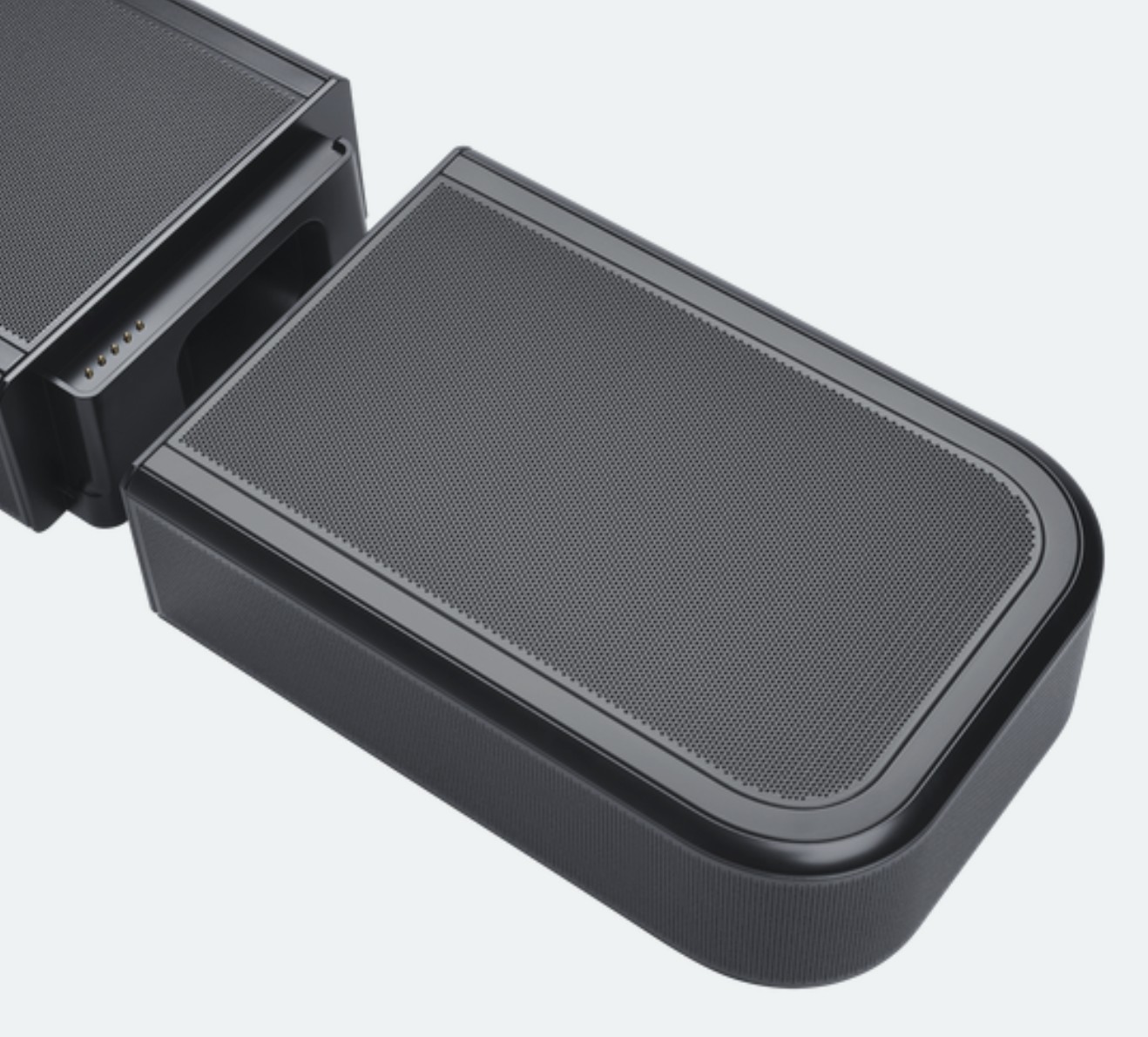
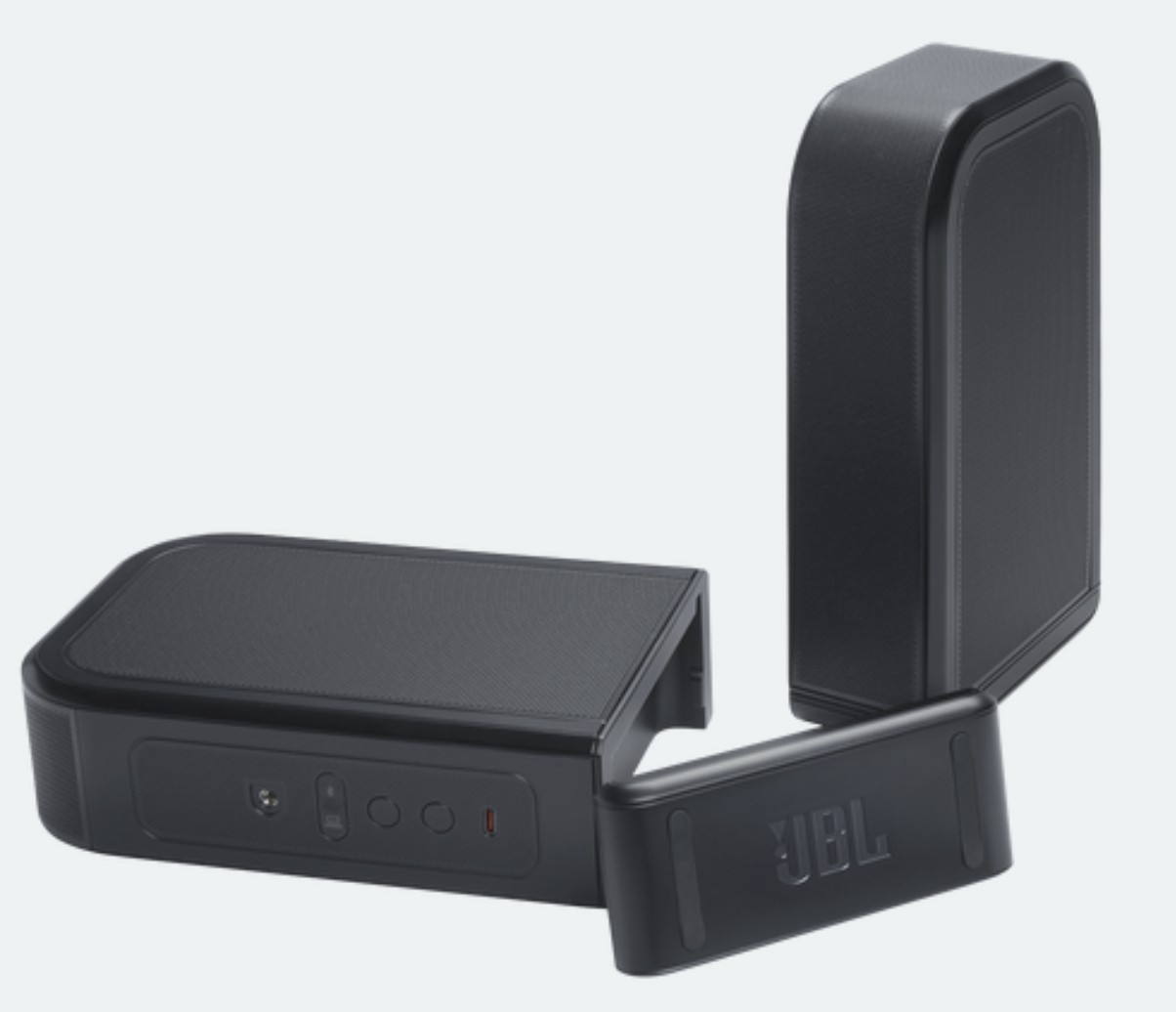
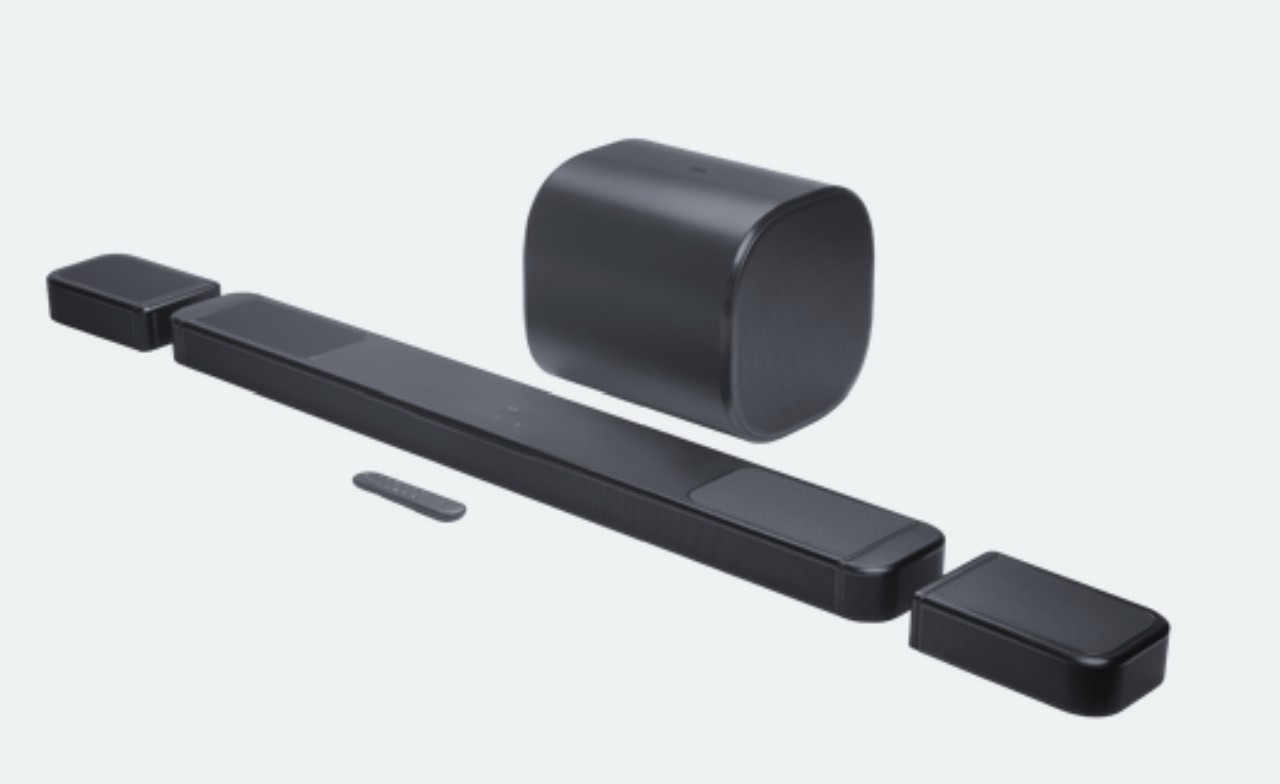
I am not sure why JBL invented the detachable speaker design, but it is unique and offers lots more flexibility. It gives you the option of an all-in-one ‘psychoacoustic’ (JBL call this MultiBeam 3.0) soundbar or a soundbar with discrete rear speakers.
As an all-in-one, it’s very long at 1404 x 58 x 136mm x 5.93kg (1030mm without the two 202 x 58 x 136 mm x 1.3kg detachable speakers).
The subwoofer is also large at 315 x 277 x 275mm x 12kg and sits on its side with a 200mm subwoofer at either end. Subs usually downfire to the floor, and depending on the floor covering, can muddy the low bass. Opposed subs are a great idea.
Otherwise, it follows JBL design cues with perforated speaker grills and matte black chassis.
There are a number of features/technologies we will explore later.
- MulitBeam 3.0: It is part psychoacoustics and part discrete rears, but the soundbar adapts to deliver a true DA envelope under most room conditions.
- Pure Voice 2.0: While the Dolby spec has a centre voice channel, JBL goes further and analyses the metadata to automatically increase the voice based on ambient room sound and the video scene’s sound. It’s noticeably better than a discrete centre channel.
- AI Sound Boost analyses the incoming signal in real time to lift dynamics and low-end punch, giving action scenes more energy and music greater drive — all without edging into distortion.
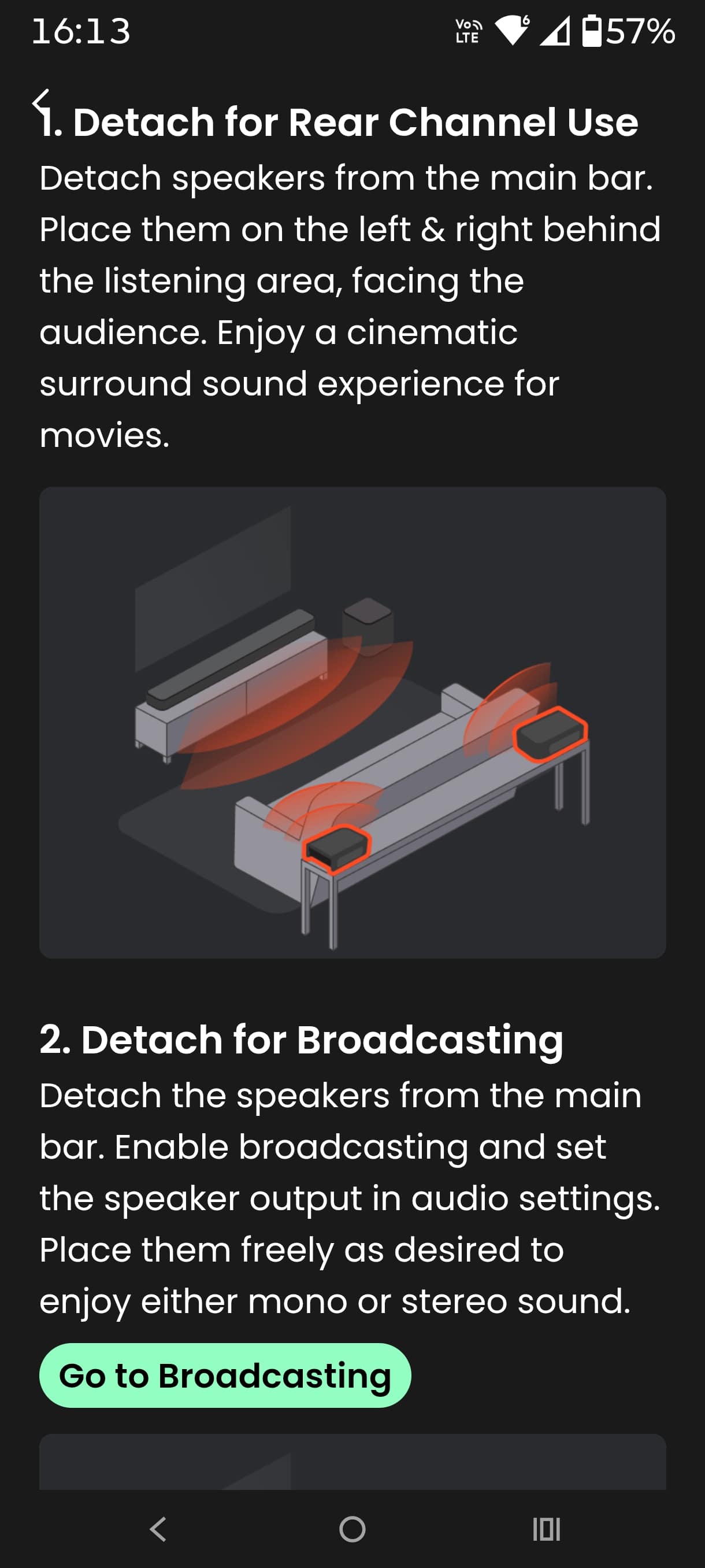
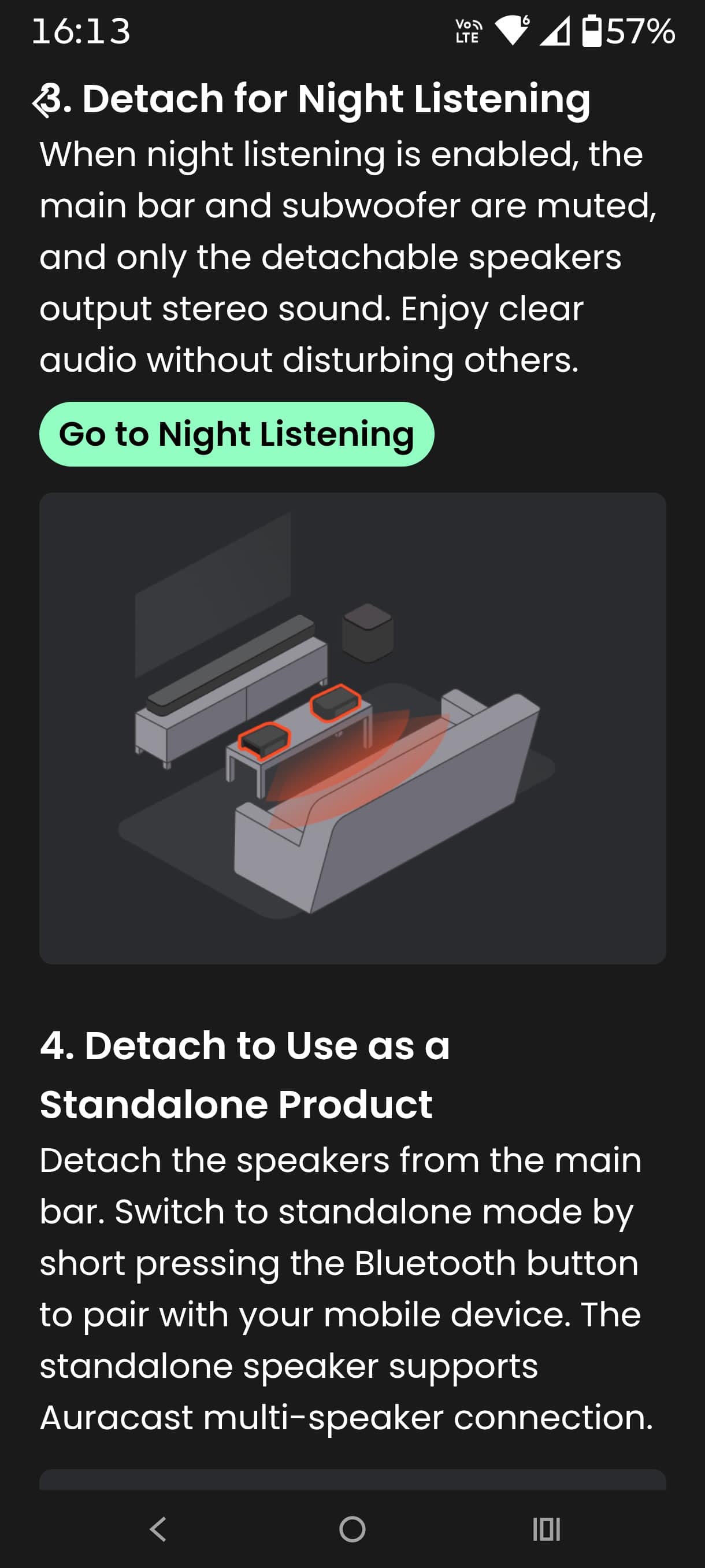
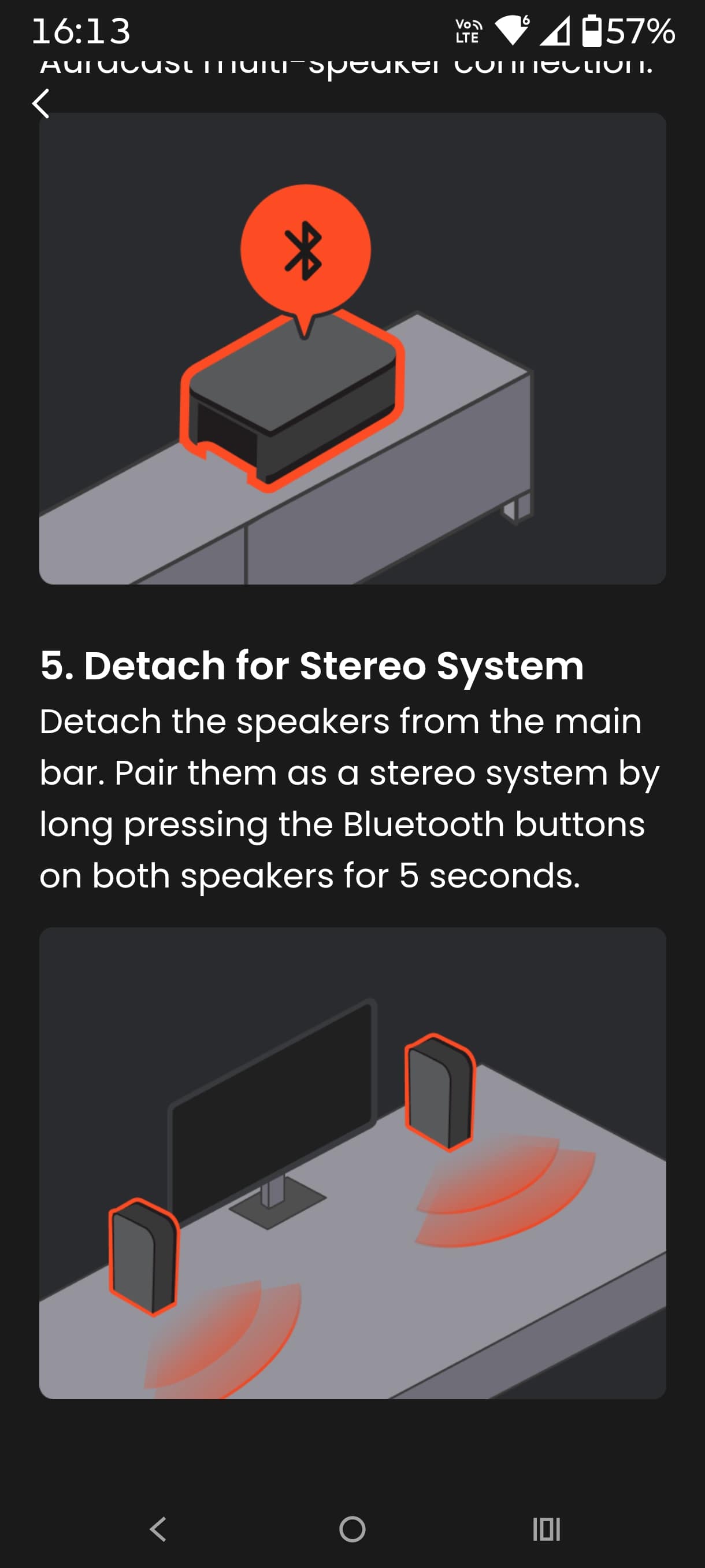
- The rear speakers are Bluetooth 5.4 (mono or stereo) pairable and become 160W, 10-hour portables (4-hour charge). They are also BT Auracast compatible, like many other JBL speakers and earphones. They can also be used as a ‘soundbar extender’ (called Broadcast) in another room. They can also be used for night-listening with the soundbar and sub muted.
- Room calibration optimises the DA envelope listening zone based on your room characteristics. Before and after made quite a difference to our experience
- Roon Ready technology, for an incredible user interface, simple setup, rock-solid daily reliability, and the highest levels of audio performance. This requires a subscription (not tested).
- Wi-Fi makes it a multi-room speaker system and can stream audio content.
Remote – Handy
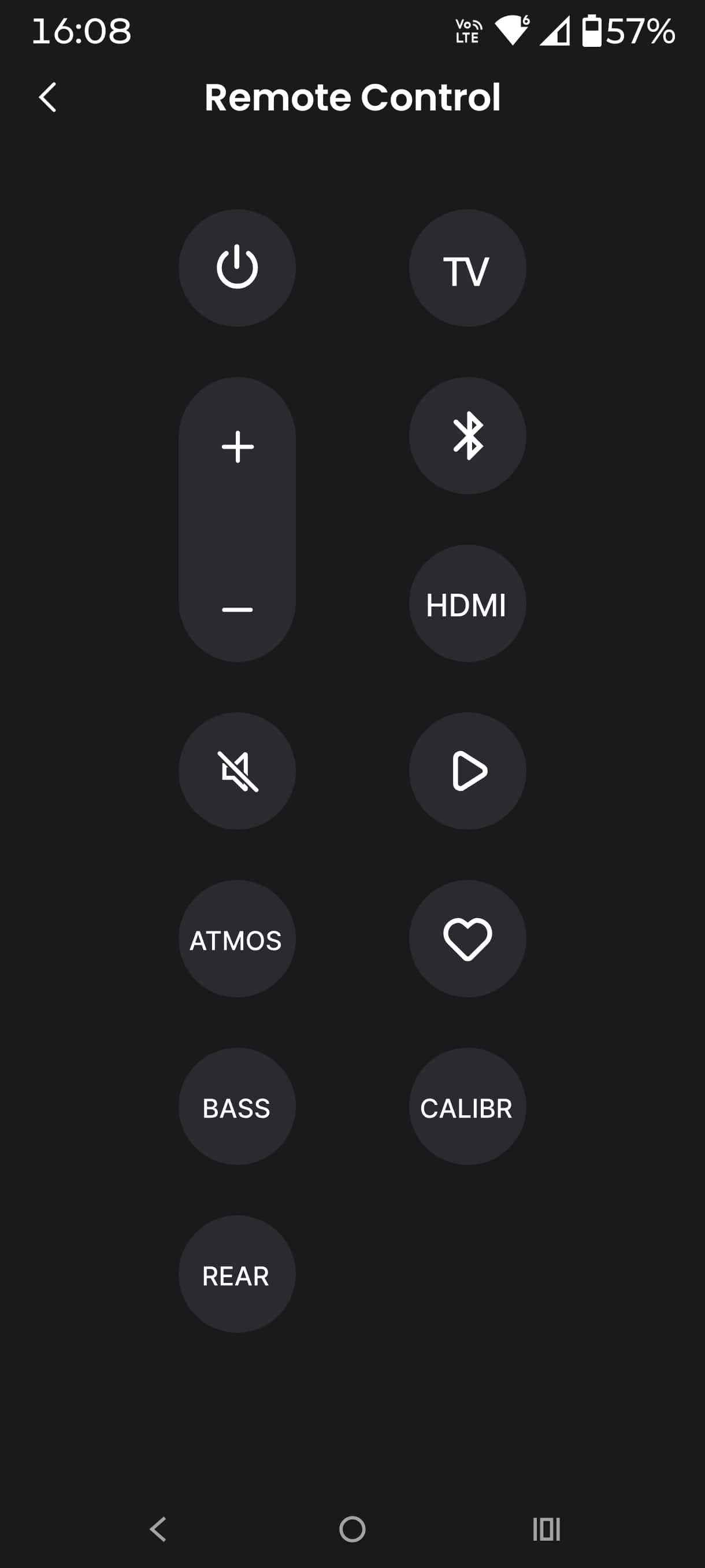
It is not a voice assistant remote (nor should it be). It is not backlit. Most TVs can be trained to perform the basic functions.
It gives quick access to:
- Volume (usually controlled by the TV remote)
- Dolby Atmos/ DTS:X effect: middle (default), high or low.
- Subwoofer Bass: 1#DELETE_THIS_LINK_20013 (default)/4/5.
- Rear volume: middle (default), high, low or mute.
- Calibrate
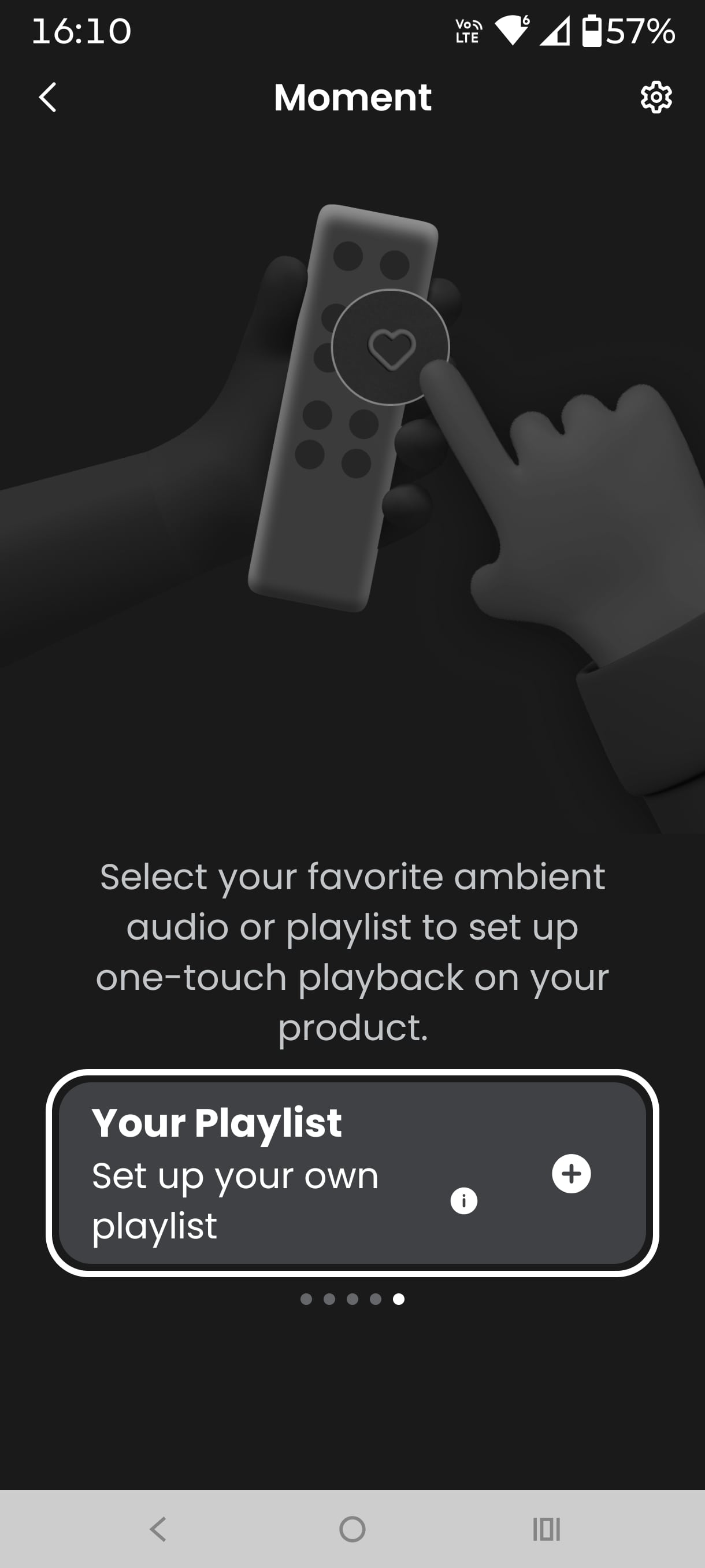
- Moment: one custom preset
- Source: TV, BT, Wi-Fi or HDMI in (1(default)#DELETE_THIS_LINK_20013.
- Playback: Start, Pause, next/previous tracks.
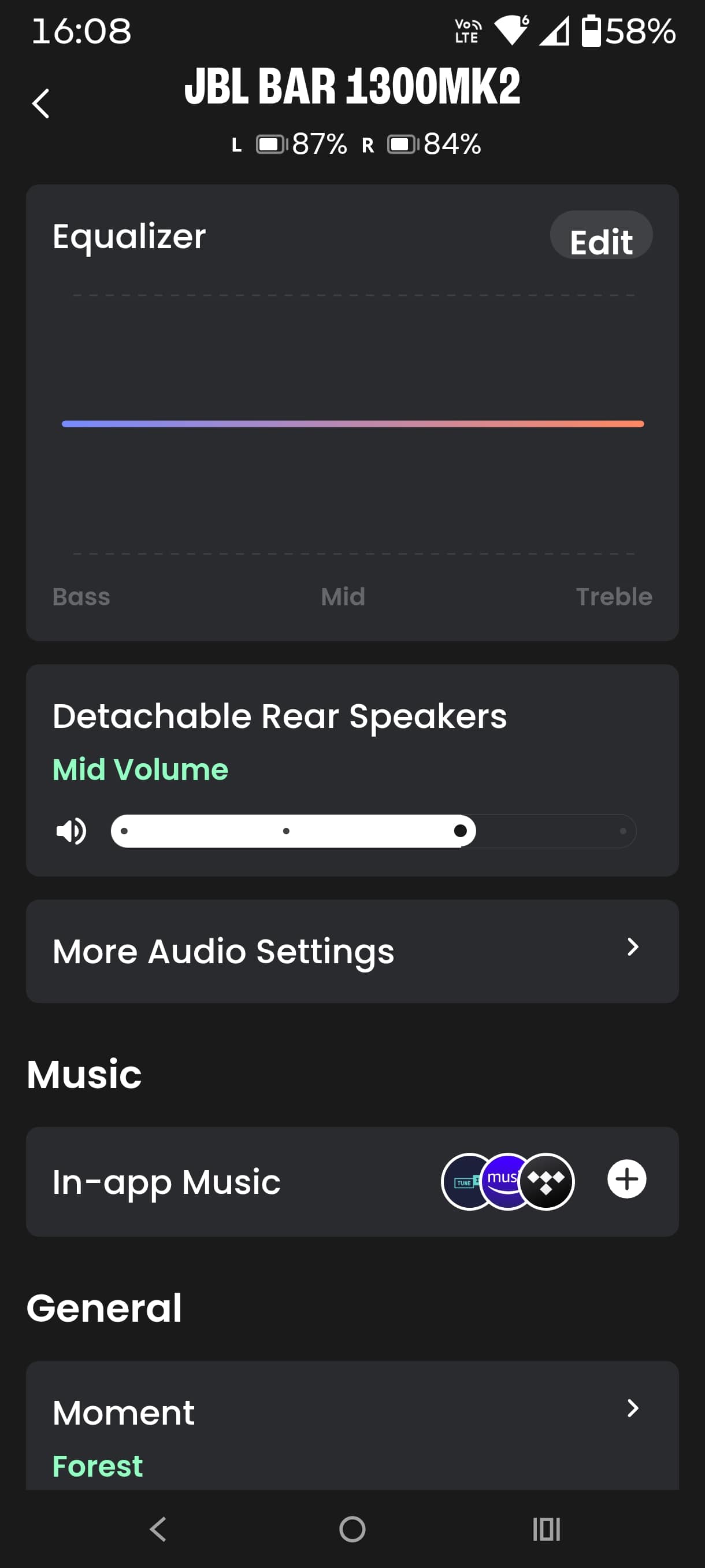
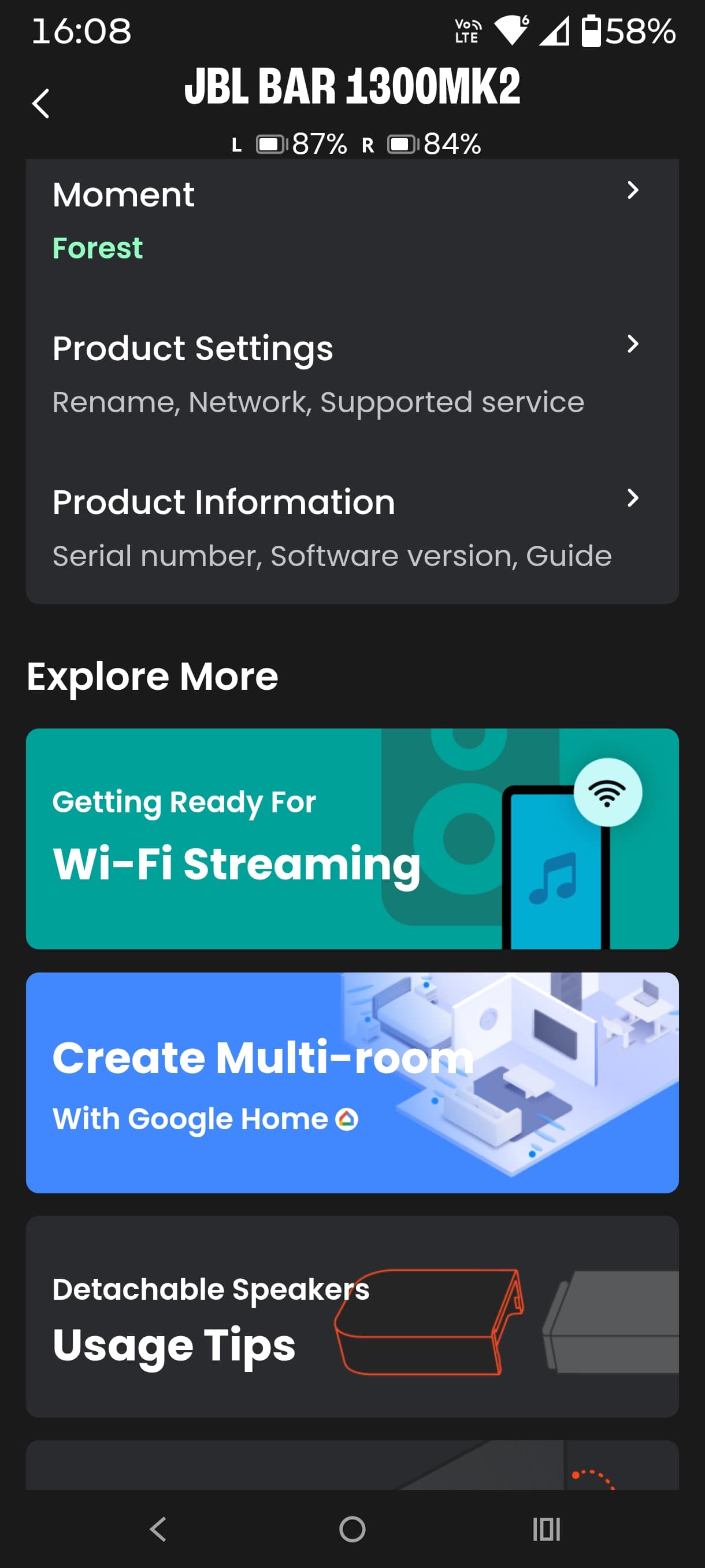
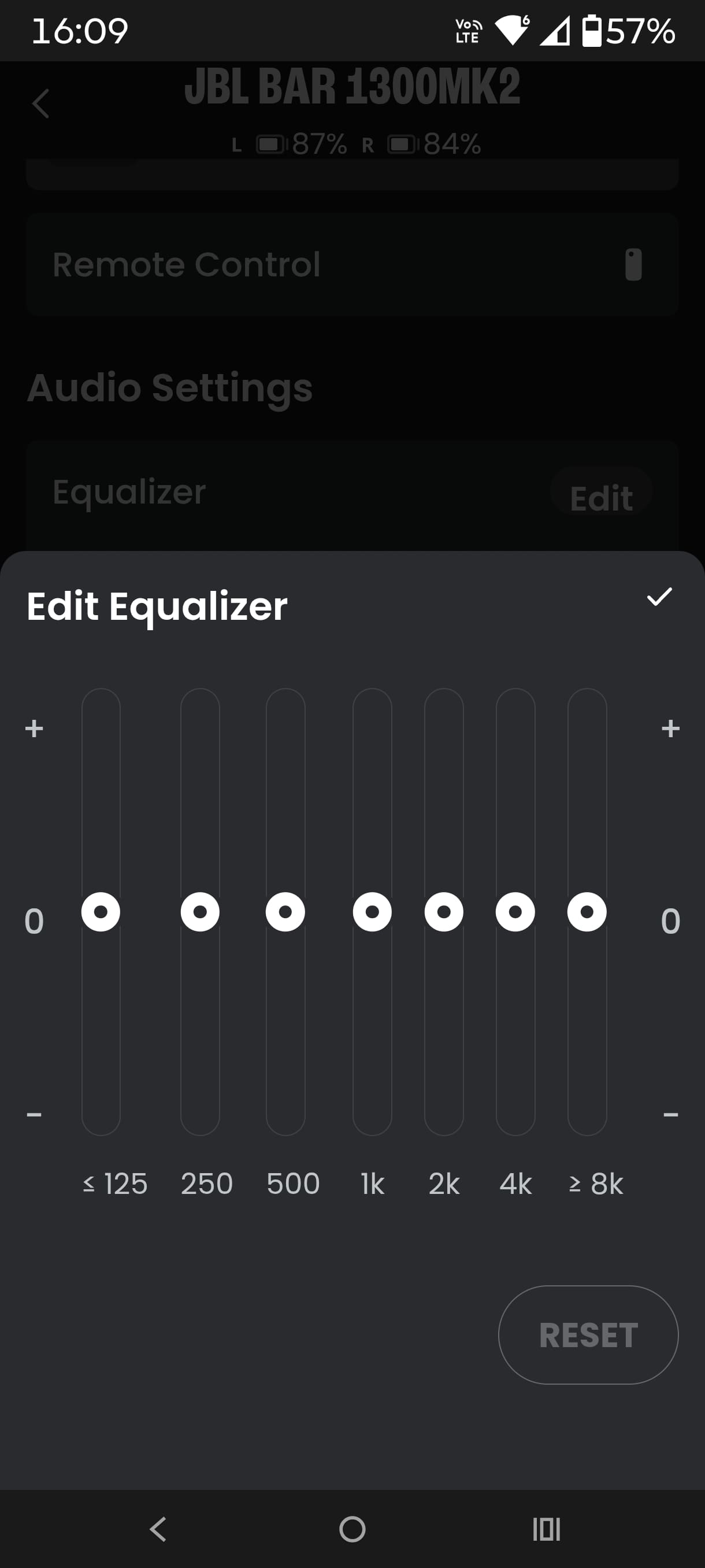
The JBL One App – Pass
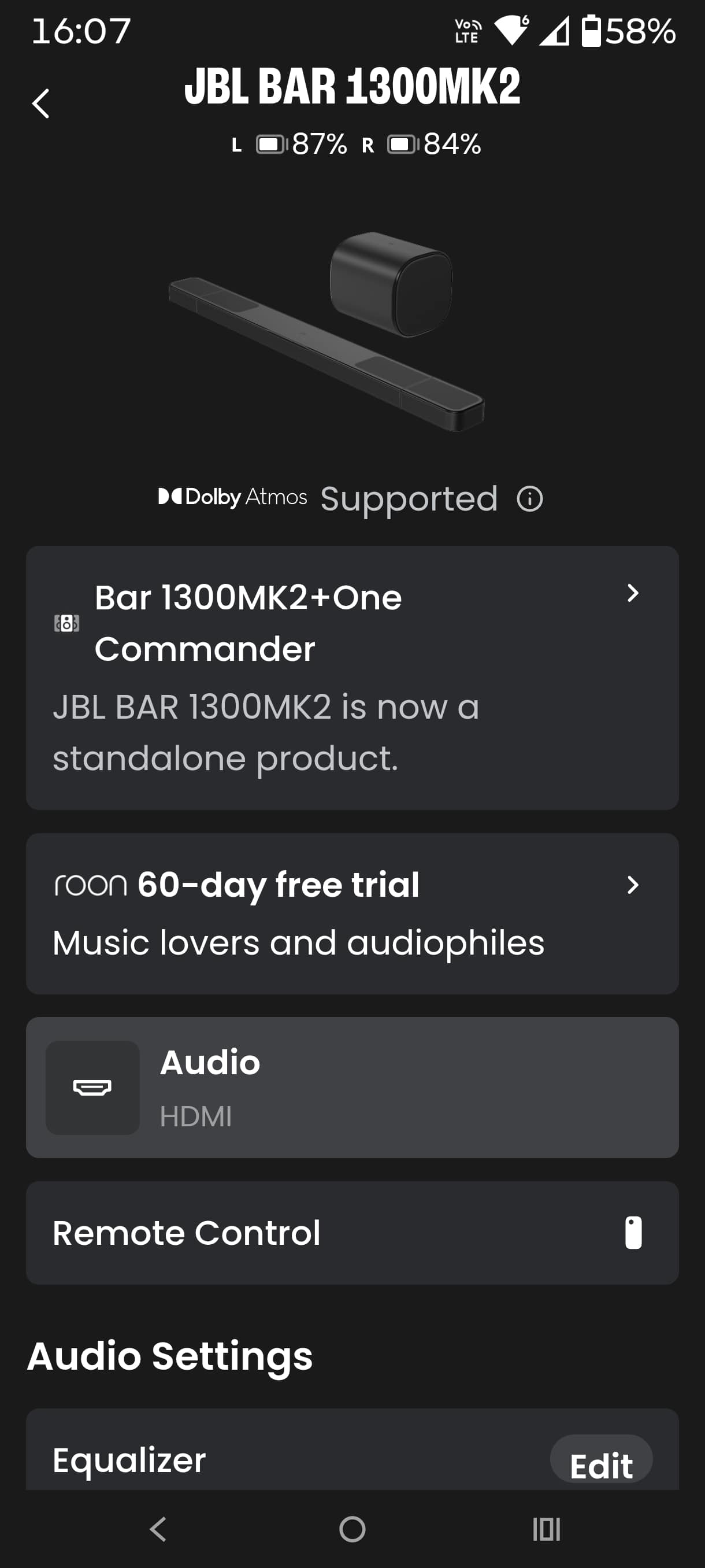
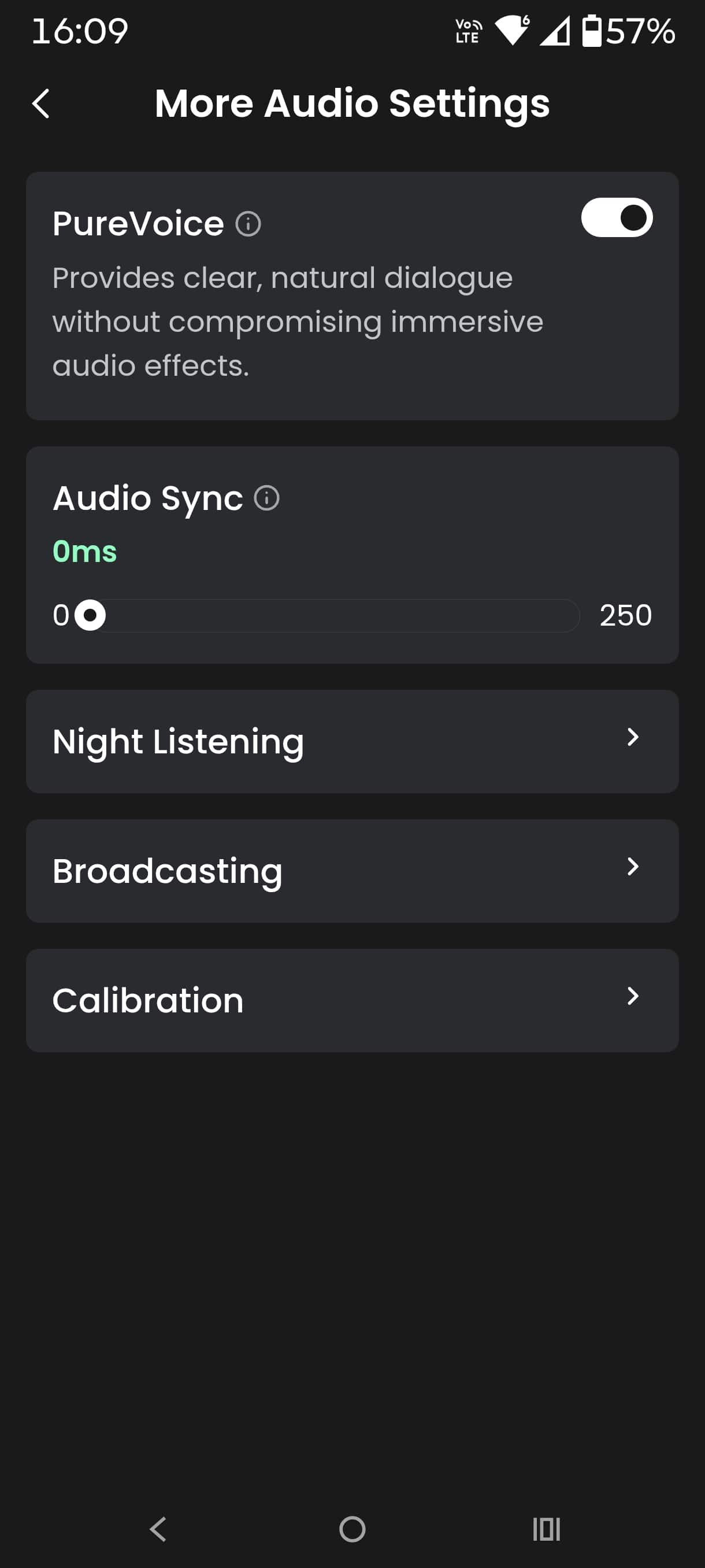
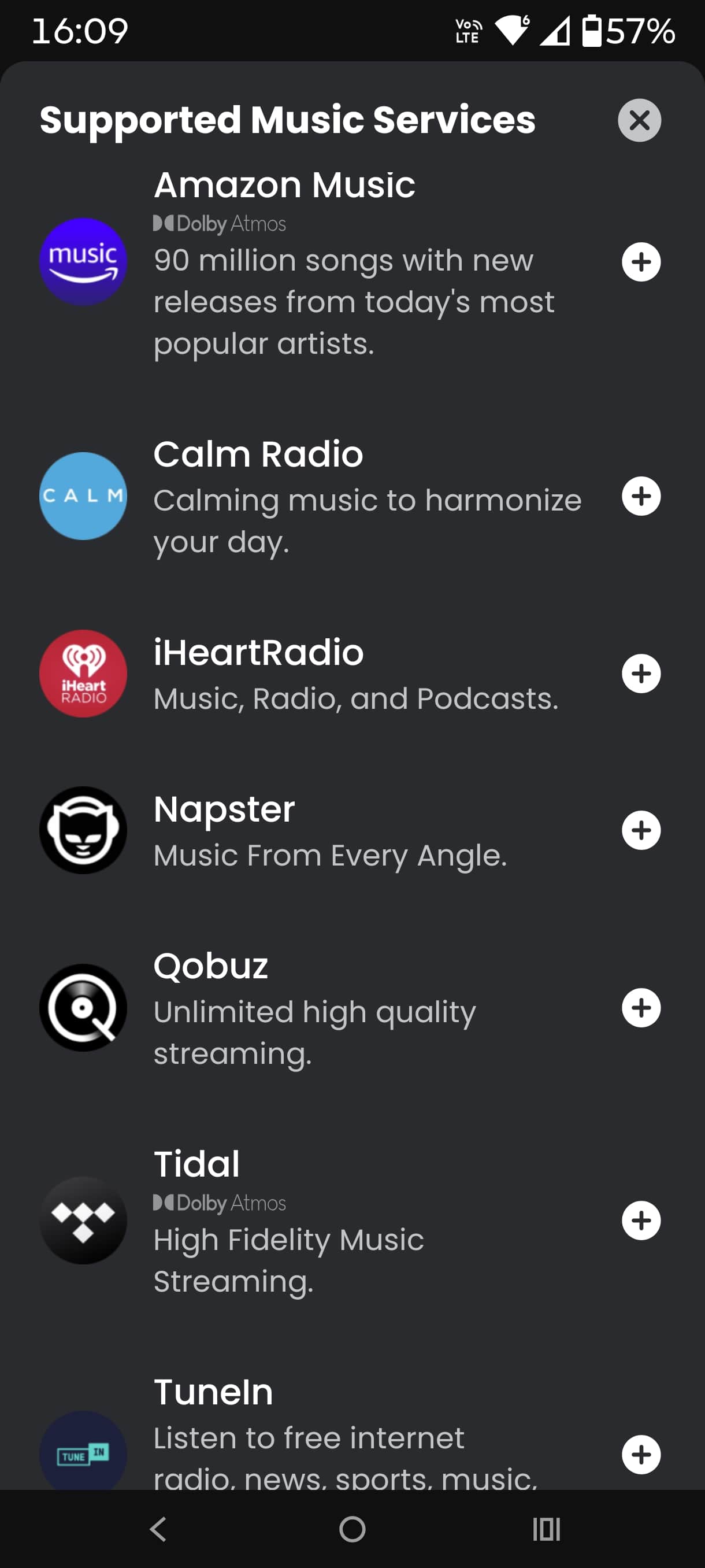
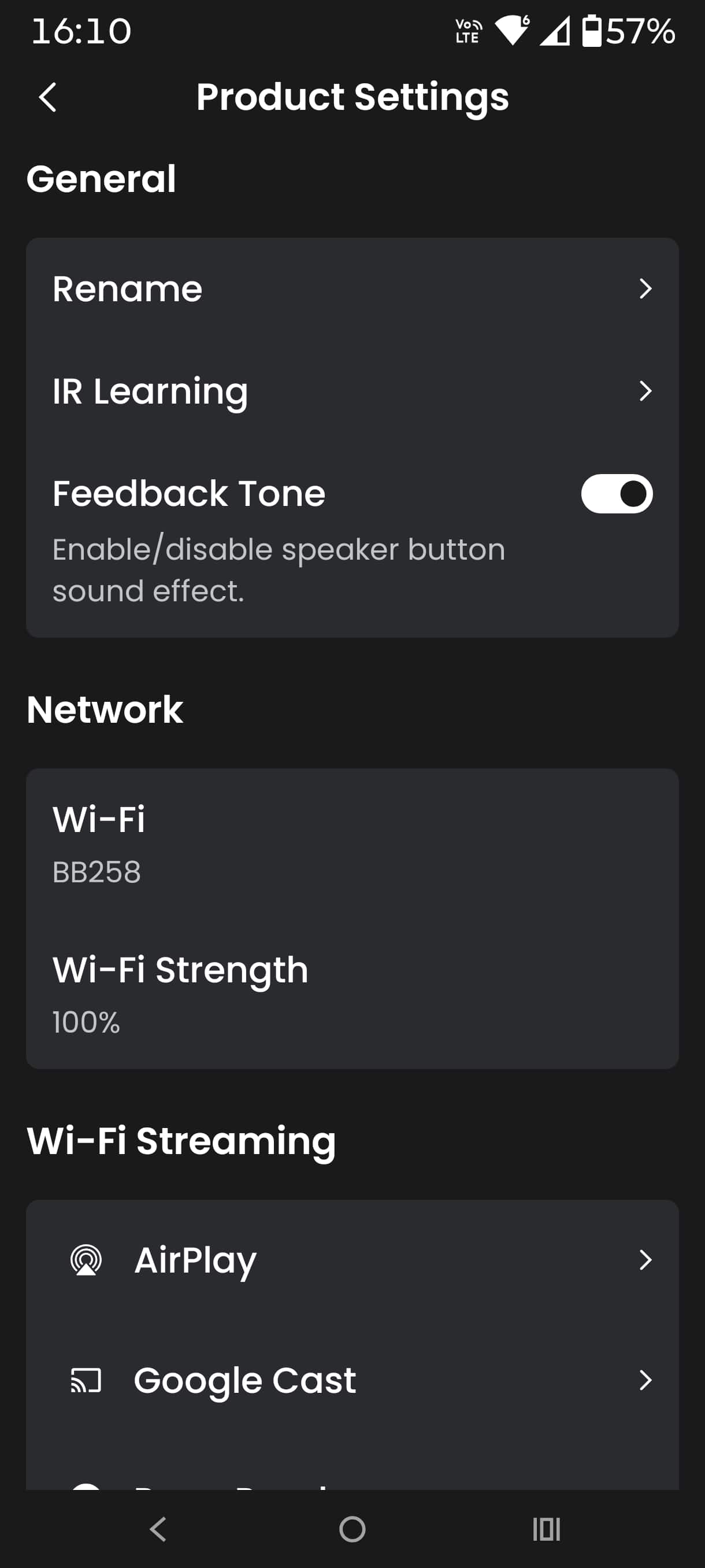
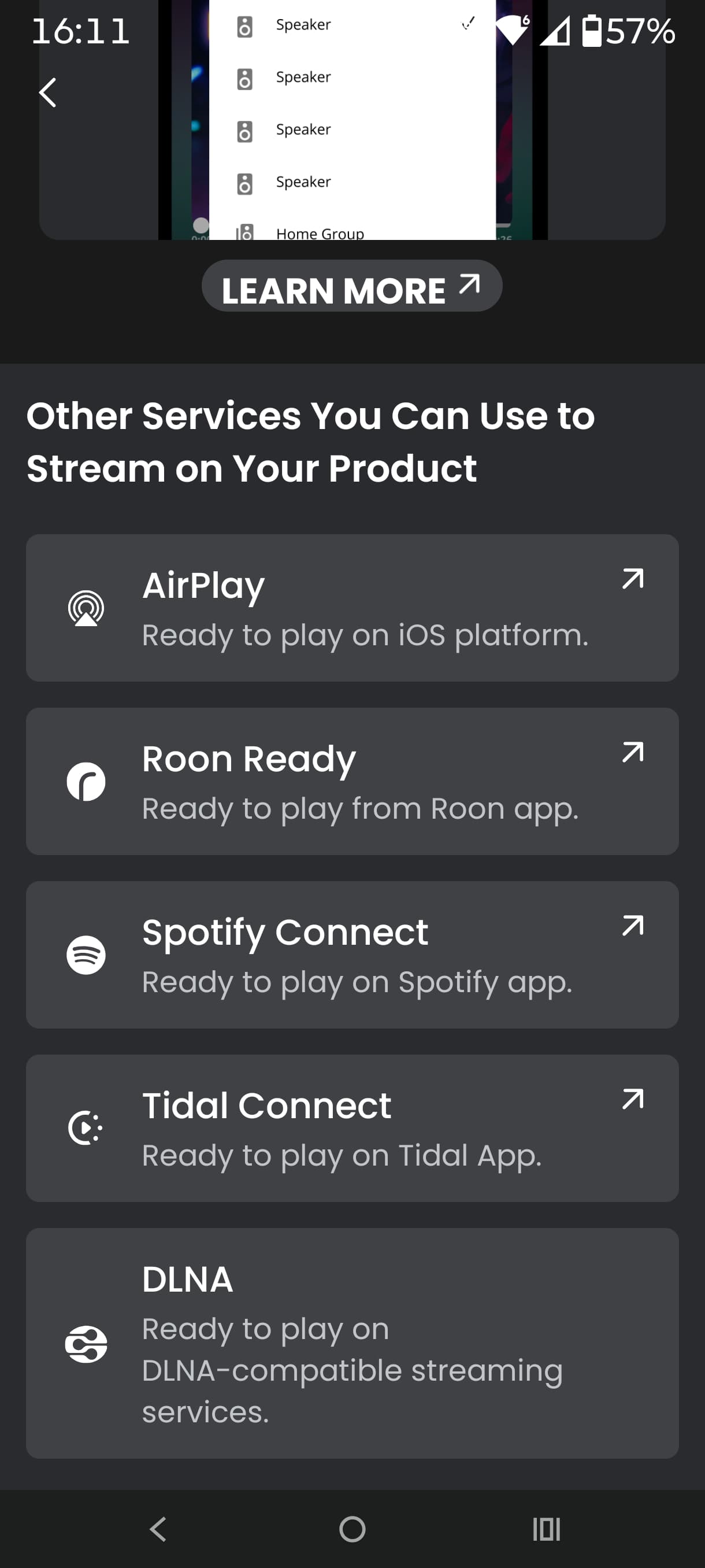
The JBL One App does not require an account, as all it does is record your profile details and register the product. We have used the App before, and the terms and conditions are benign. Any personal data is likely stored in Singapore. It is a low privacy risk, but remember that OK Google, Alexa, Siri, audio, and video streaming have their own policies.
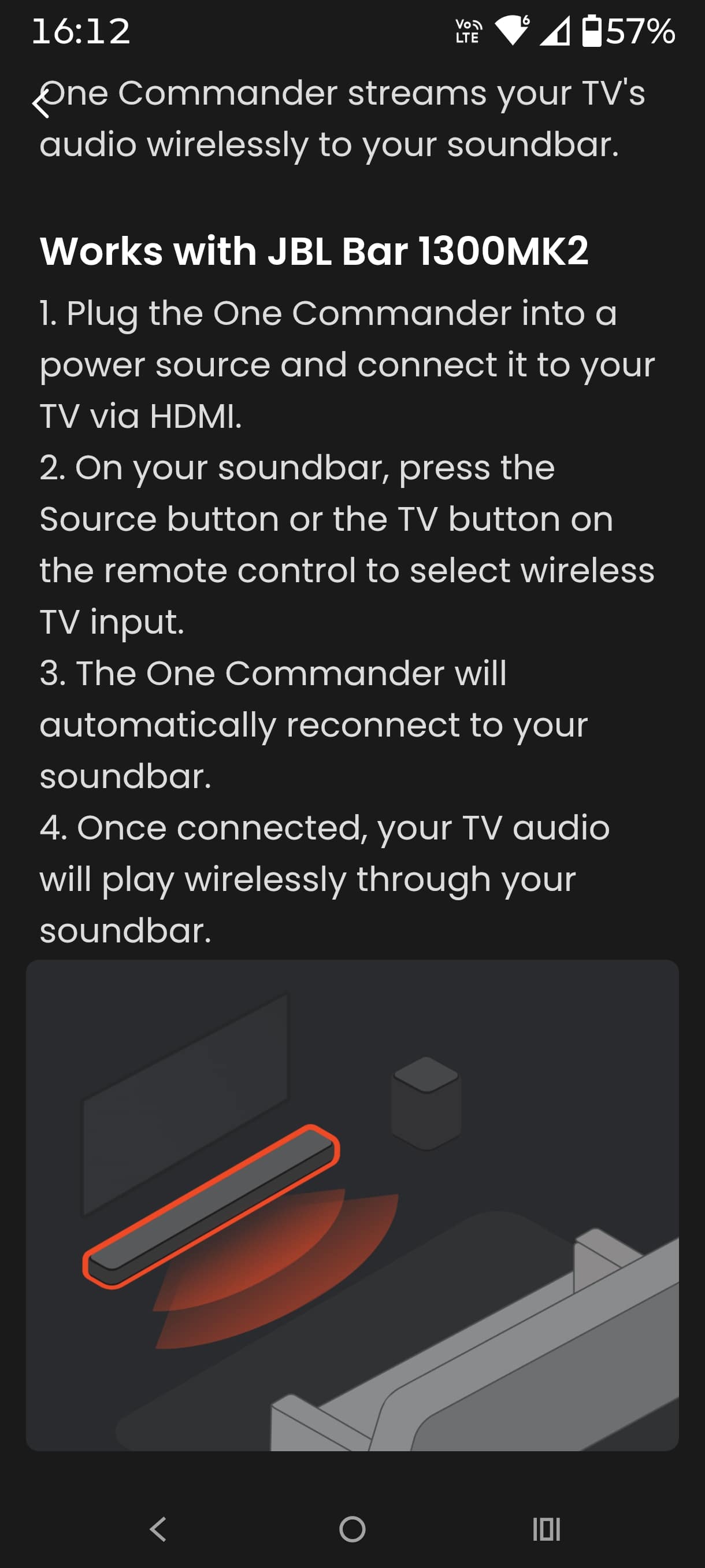
It seems stuck on Dark Mode, so apologies for the dark screenshots.
Sound bar ports – Pass+
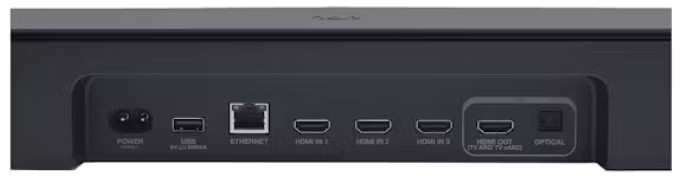
- HDMI eARC (or ARC) 2.0b, 18Gbps, with HDR10+, Dolby Vision passthrough
- 3 x HDMI 2.0 18Gbps in (It does not support 4K 120Hz, variable refresh rate (VRR), or auto low latency mode (ALLM). Consoles are limited to 1080p@60Hz.
- Optical in (DA is reduced to surround only)
- USB-A 2.0 5V/.5A/2.5W now supports 16-bit/48000khz MP3 audio playback
- Ethernet (no spec provided, but likely 10/100Mbps)
The rear speakers have a USB-C port for external charging in permanent installations.
One Commander
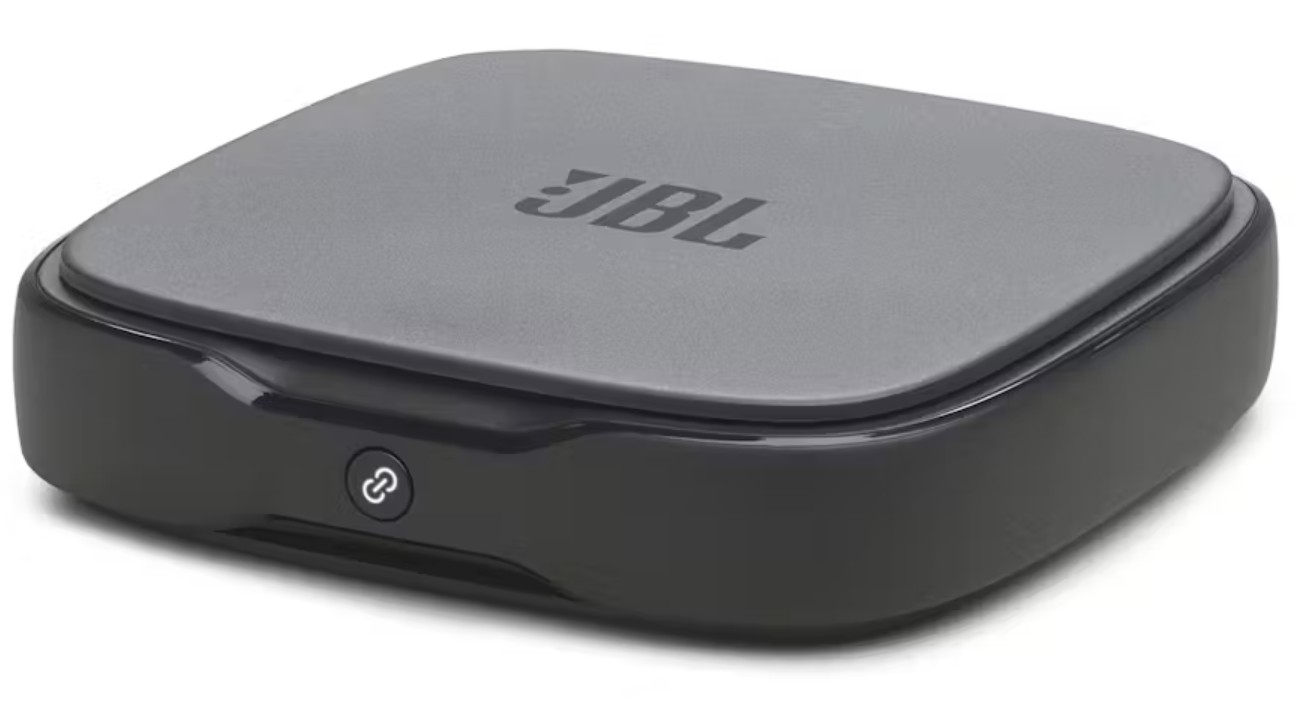
It is a separate wireless dongle that connects to your TV wirelessly to the soundbar, providing a lossless HDMI equivalent connection for PCM, DA and DTS:X. It allows for more flexible placement of the soundbar and is managed by the JBL ONE app.
It may be useful for connecting projectors or other HDMI sources. It does not support HDMI eARC CEC (on our test setup). It makes no difference to the sound signature.
Placement – Important
I have seen too many DA installs that don’t work well because of a few simple placement issues.
A DA conical-shaped envelope, regardless of how good the soundbar is, extends about 3 metres from the TV screen.
The soundbar can be placed on a desktop 500-700mm off the ground or wall-mounted about 120mm below the screen (assuming the middle of the screen is at seated eye height). Wall brackets are supplied. Remember, wall mounting will have obvious power and HDMI cables unless you can conceal them or perhaps use the One Commander.
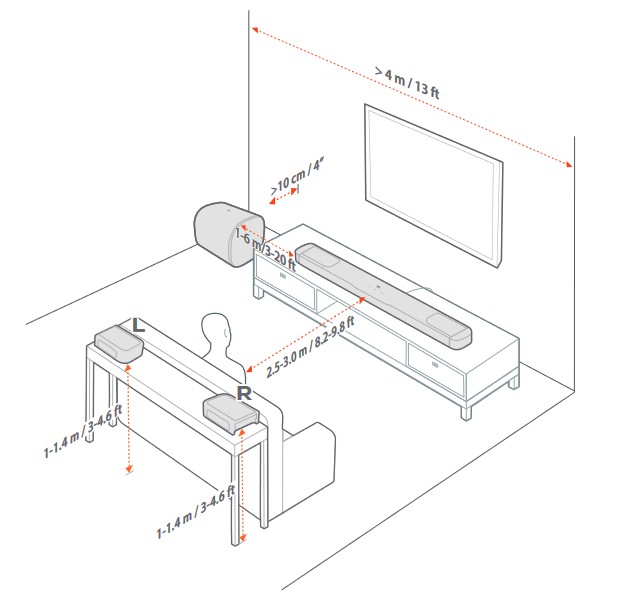
The rears are placed about 30cm behind the listening zone at up to 1.4m high. They have rubber feet and wall mounts (remember, they need power for permanent installs). They also have a ¼” tripod socket on the side, but this changes the ‘up’ orientation and is not recommended for DA – fine for BT use.
The sub can go anywhere in the room, but ideally at the front, about 1-2m from the soundbar. As this produces sound from both ‘ends’, it’s best centrally located. If it is near a wall, then leave 30cm clearance.
If you decide to use psychoacoustics, you need side walls no further than 4 metres apart and ceilings up to 3m. Glass windows, drapes and plasterboard all have different sound absorption properties, and the calibration will help compensate.
Consumer Advice:
In all our soundbar tests, the only one that does not require such critical placement is the Sonos Arc Ultra (7.0.2) and dual rear Era 300 speakers (each a 5.0.1 speaker). This combo can create a DA envelop almost anywhere, but at nearly $4500 it is not for everyone. Read: Sonos Arc Ultra soundbar – Add Sub 4 and Era 300s for Dolby Atmos on steroids (AV review)
The JBL Bar 1300MK2 is our unequivocal pick of soundbars around $2000.
BT 5.3 smartphone to soundbar: Pass
It does not appear to support multi-point, but does reconnect to the last paired device.
The rear speakers are BT 5.4 and support multi-point and Auracast. Codecs are 16-bit/48000kHz SBC and AAC. High res is supported via Wi-Fi streaming.
Ethernet or Wi-Fi N 2.4 and 5 GHz – Watch out, Sonos – Pass
The soundbar (not the rear speakers) will connect to Wi-Fi, and you can stream high-definition audio from Spotify Connect, Tidal, AirPlay, or the JBL One app, etc. It also supports multi-room playback with Wi-Fi-connected smart speakers.
Google Cast– Pass
You can stream from Android or iOS.
What is Auracast?
Auracast allows an audio signal from a transmitter (e.g., tour guide systems in museums, public address systems and increasingly in TVs) to be transmitted to unlimited receiving devices (e.g., headphones, hearing aids) within a fixed transmission radius. This may be the answer to hearing-impaired use of TVs.
Calibrate: Pass+
The JBL BAR 1300MK2 has an inbuilt microphone to calibrate the soundbar and rear speakers to the room. You first place the rears where two viewers would sit, and the tones establish the DA sound envelope. Then you move the rears behind and beside where the viewers sit and calibrate for surround and 3D height. It makes a large difference to DA.
Rear Power use – Minimal
These can be powered by USB-C 5/9/12/15/20V at up to 3A but do not draw more than 15W. Claimed battery life is up to 10 hours at 50% volume, and tests showed 7.5 hours at 70% volume connected to BT or the Bar.
Bar Power use – Minimal
At typical volume, it consumes between 20-30Wh. At full volume (rears separated), DA is about 100W.
How does it sound? Exceed
Let’s just say that it’s the second-best DA I have heard and the best at $2000 I have heard. And it’s loud – 90dB is deafening, although you will play at much lower levels.
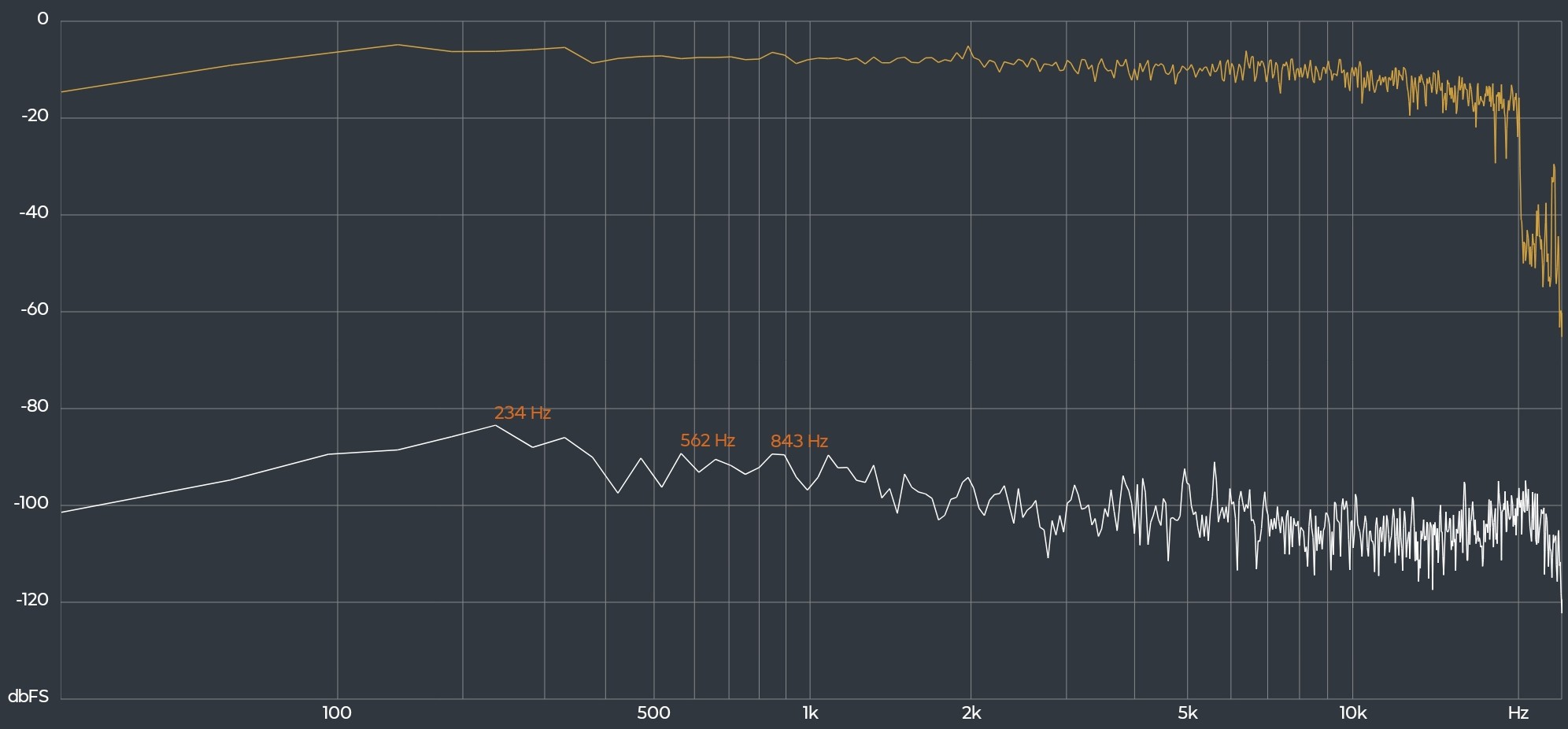
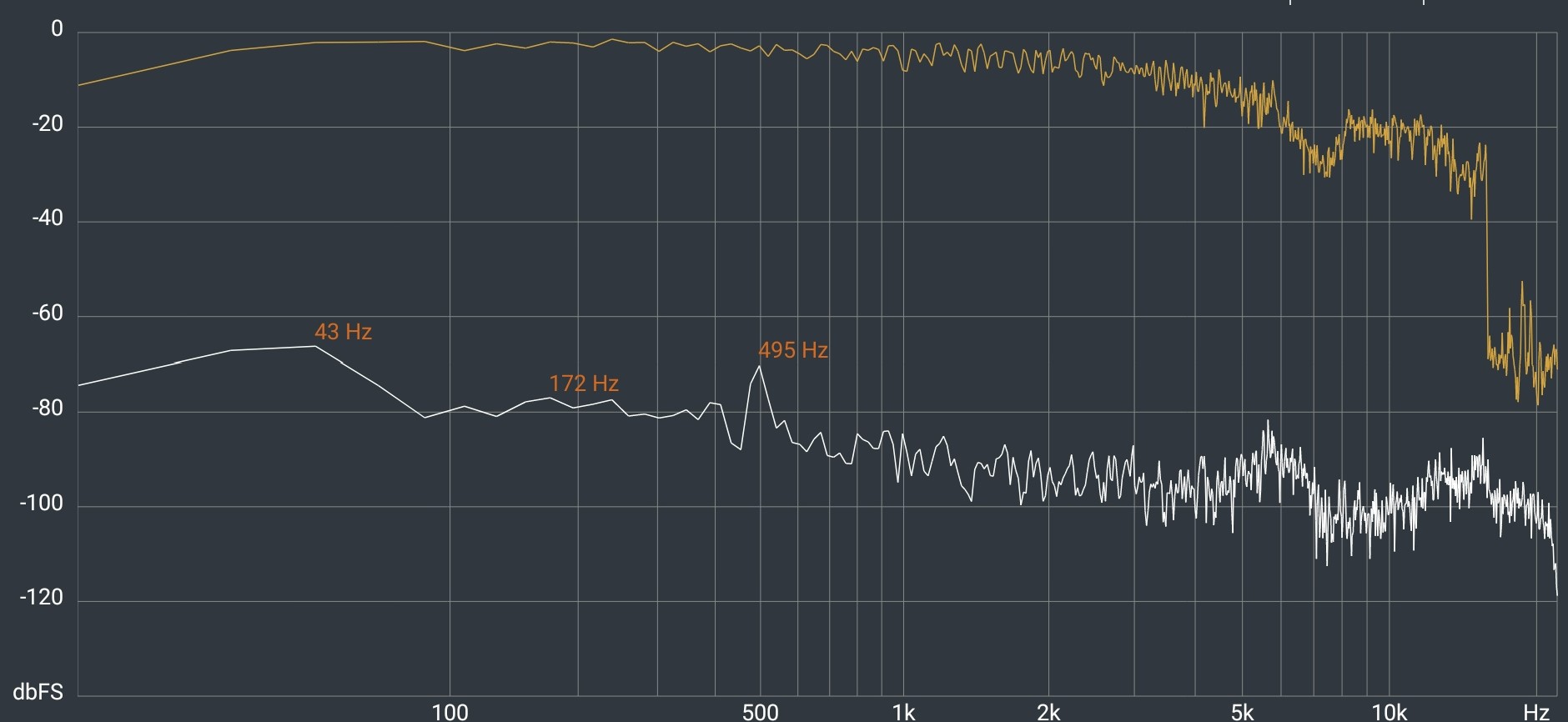
Its only competition is the Samsung HW-Q990D 11.1.4 Dolby Atmos soundbar – simply stupendous, and as you can see from the white noise native frequency response tests below, the JBL Bar 1300MK2 eats Samsung for bass, clean mids, and a vastly more stable top end. Samsung is best with Samsung Q-Symphony TVs, where it can use the soundbar and the TV speakers.
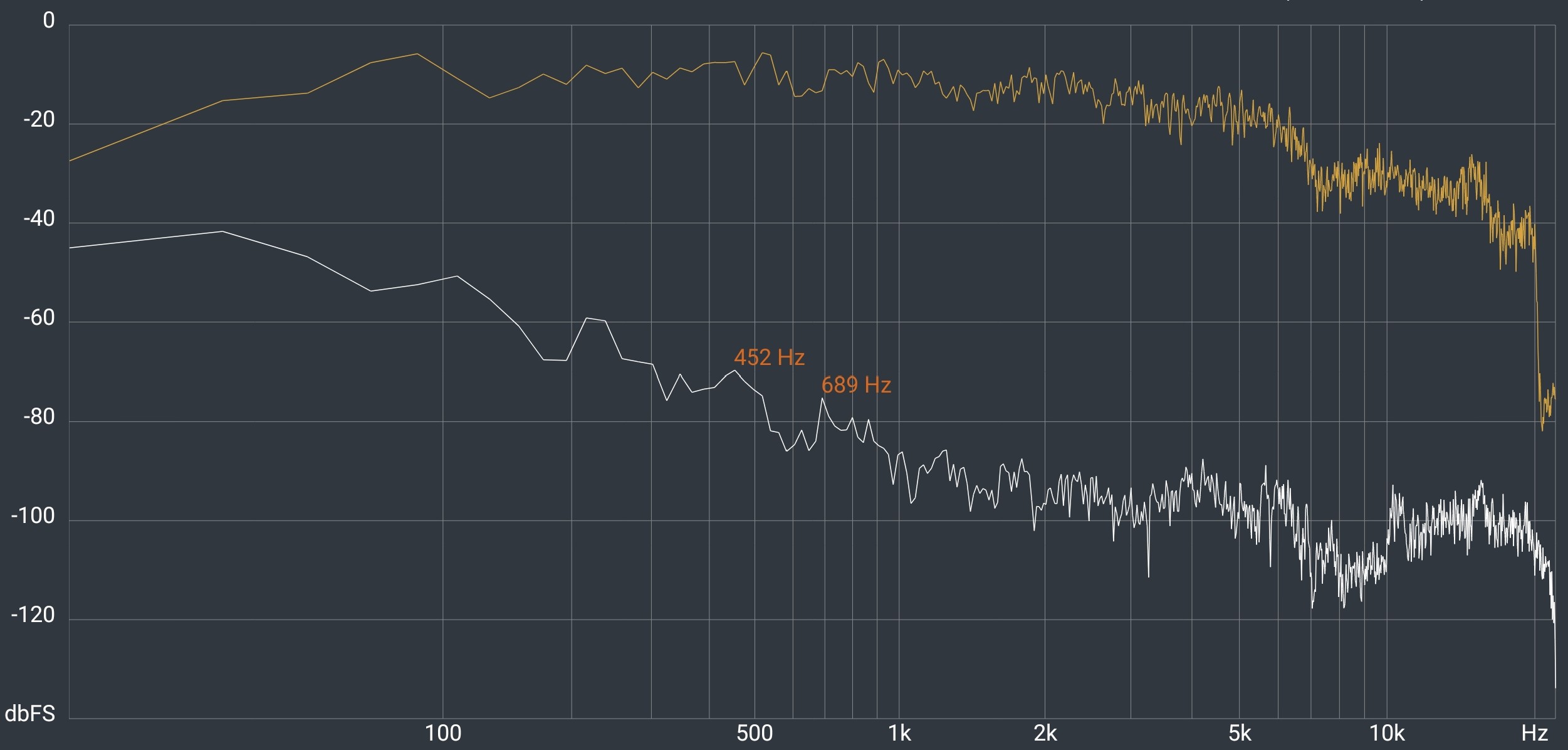
When compared to the original JBL Bar 1300 (which was damned good), the significant difference is in the top end (mid-to-high-treble), giving it a nice crispness, lovely sense of sound direction and movement and a feeling of ‘air’, as though the music were really there.
The sound stage is wider than the 65” TV we tested it on.
It decodes and up-scales surround sound formats, including Dolby Digital 5.1/7.1, and Blu-ray or 4K streaming (HDR/HDR10+/Dolby Vision and DA). The TV must output Bitstream or RAW – not PCM.
PureVoice 2.0: Pass+
This is where it shines over the original. Voice is cleaner and crisper. But more important is that it does not substantially alter the audio genres like many DA soundbars that recess bass and treble to accentuate mids for clearer voice.
Music: Pass+
MP3 Test tracks are clean, bass is thumping, instrumentals are crisp, and the stereo separation is excellent. It does not matter whether it is via Wi-Fi or Bluetooth. The soundbar supports MP3 16-48kHz and 80-320 kbps, so you can play hi-res music. Music is best played with sound effects off.
One caveat. It does not upscale PCM 2.0 to faux surround (good). It does handle surround sound formats, including Dolby Digital 5.1, and Blu-ray or 4K streaming (HDR/HDR10+/Dolby Vision and DA).
Dolby Atmos: Exceed
With the caveat that rear speakers are behind the viewer (as they should be), the DA effect is thoroughly convincing.
Out-of-the-box, the 3D spatial height was a little forward-centric (to be expected from four up-firing soundbar speakers). The sound objects (like a plane flying overhead) were strong at the front, weaker in the middle and acceptable at the rear.
But after calibration and a little tweaking of the rear height volume, the smooth movement and pass-over that we experienced thoroughly emerged.
2D sound is totally forward-centric as it should be.
Rear BT speakers – music – Exceed
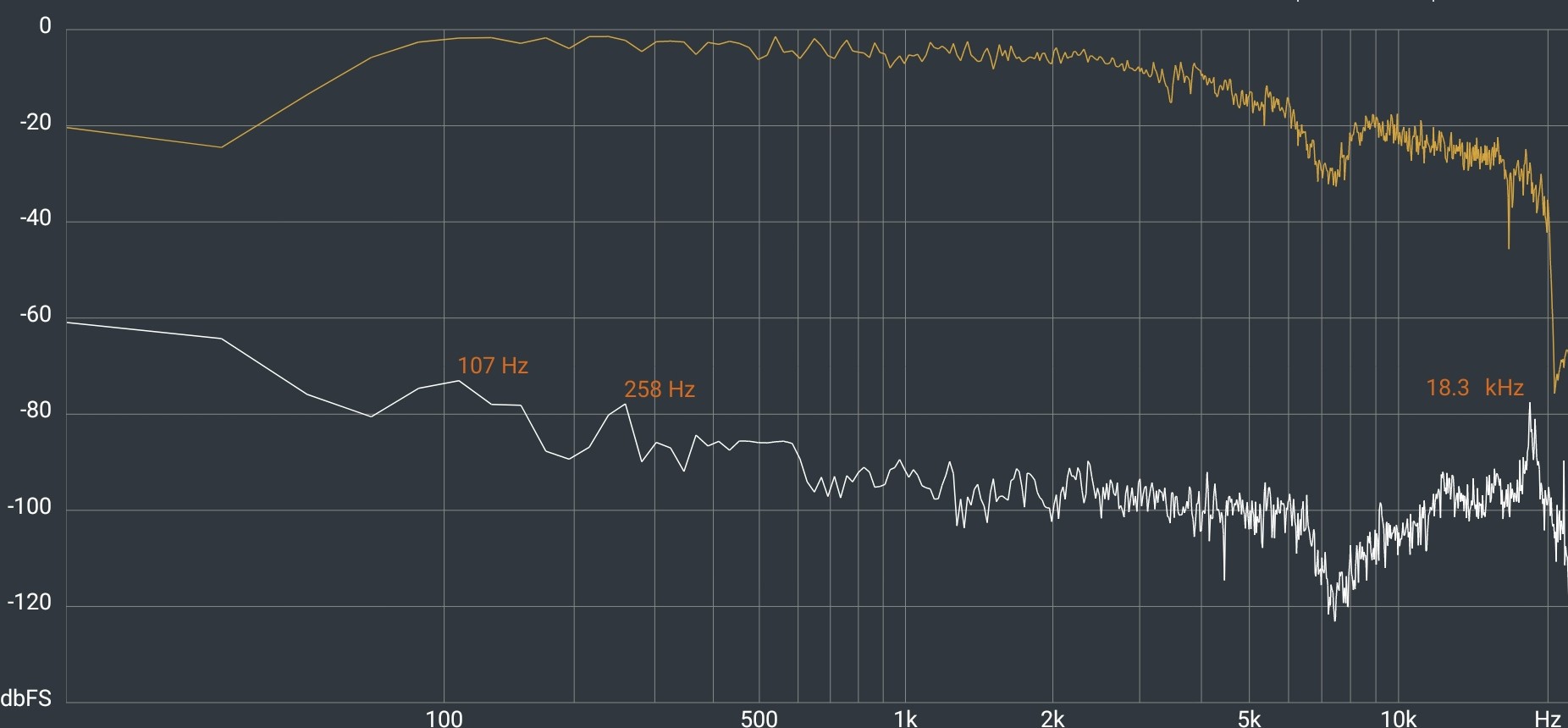
These are excellent BT speakers in mono or stereo mode. Mid bass kicks in at 50Hz – unheard of in most BT speakers. It builds strongly to 100Hz, where it is flat like the soundbar – important for sound consistency from the front and rear speakers. The maximum volume is 85dB.
Multi-room Audio: Pass+
You can pair the App with most voice assistants. It can then be part of multi-room audio (Wi-Fi or Ethernet).
I’mTech’s insight: JBL Bar 1300MK2 is an Impressive and immersive 11.1.4 Dolby Atmos sound bar
If all you have is $2,000, then you can do no better, as you would have to spend two to three times that to get any audible improvement.
It may look like the original, but it is far more refined, has more features and and the sound is just a little nicer all around.
Would we buy it?
Yes. Our tests are well above the average user’s standards/requirements. As such, we perhaps expect more than we should. Joe and Jane Average will be deliriously happy. On that point, if budget is a stretch we would also recommend the $1599.95 JBL BAR 1000MK2 7.1.4 (which we have not reviewed yet).
We give it the highest recommendation for powerful bass, true DA, great music and the new features like BT speaker, broadcast, and now Wi-Fi streaming.
Rating JBL Bar 1300MK2
The original scored 89/100 compared to the Samsung at 81/100. The Sonos Arc Ultra/Era 300/Sub scored 92/100. This is 90/100. Congratulations to JBL.
- Features: 90. A fully featured DA soundbar with detachable rears, remote control, an app and even more features than the original.
- Value: 90. Samsung HW-Q990F is $1999, and while it has some interesting additional features, it lacks some of the JBL features.
- Performance: 90. It offers an authentic, real DA experience. Using the rears as BT mono or stereo speakers is interesting, and the sound signature is impressive.
- Ease of Use: 90 – It is easy to set up and use; the App is simple, and calibration compensates for most room types.
- Design: 90. It is well-designed and made. The detachable speakers and soundbar now have end caps for the soundbar.