
The Federal Government has announced a new back-of-the-napkin potential policy called Solar Sharer, which appears to introduce multiple impenetrable layers of red tape and more market confusion. And it won’t work!
Chris Bowen, Minister for Climate Change and Energy, released this document that is long on self-congratulation and very short on details. So much so that the Energy Council of Australia immediately responded, stating it was disappointed by the Government’s lack of consultation on its Solar Sharer announcement. In fact, no mention of Bowen’s bad dream was discussed with the very people who need to be consulted.
What is Solar Sharer?
If we de-hype Bowen’s release, we are not a whole lot clearer. It’s typical government double-speak.
Paraphrased
We often have more electricity in the middle of the day than we currently use. Solar Sharer will encourage consumers to use more of that power when it’s abundant. They will need to have a smart meter and be able to move their energy use into windows where electricity is free to get any savings.
There is a reference to non-rooftop solar homes getting free electricity, too.
Initially, it is for New South Wales, South Australia, and South-east Queensland that have agreed to be bound by a default market offer.
Government consultation opens today. Submissions can be made on the department’s consultation hub.
Still not clear because Solar Sharer is vaporware – run it up a flagpole and see if it flies
OK, we don’t know when you get free electricity, but we can assume a three-hour period around midday when grid electricity will be free.
Of course, this won’t really affect rooftop solar owners who are currently exporting power to the grid at that time for a mere pittance, and even the feed-in tariff is likely to disappear if Solar Sharer goes ahead. Does the government honestly think they will switch off solar to use three hours of free grid power?
It’s a ploy to reduce peak solar feed-in loads by encouraging you to charge the EV, solar battery or run heavy electricity use applications in the free period. In theory, fine, but it’s not going to reduce peak period loads or do much for off-peak use from 10 PM to 7 AM.
In all, it’s not going to have any real impact as the energy retailers will (mark my words) increase the fixed daily supply charge (to be connected to the grid), currently ranging from about $1 to $4 per day.
Smoke and Mirrors
Finn Peacock, formerly of the CSIRO energy division, now runs comparison website Solarquotes, is sceptical.
“Consumers should only switch to that plan if they think they’re going to be better off on that plan. Most consumers, I think, won’t be better off on that plan. Forcing retailers to offer free power during the day will see them compensate by pushing up other costs.
I’mTech’s insight: Solar Sharer is an ill-conceived Band-Aid solution
As any rooftop solar owner will tell you, the panels generate power from sun-up to sun-down, with the most power generated in the middle of the day.
As the generation exceeds the home load, the excess is used to charge batteries (free energy stored until it is needed at night) or exported to the grid for a few cents per kWh. Most solar batteries are 5, 10 or 15kWh and frankly are recharged well before 11 AM.
Bottom line – the grid gets lots of unwanted power it cannot use.
The Government has tried to tie battery ownership to a faux VPP (Virtual Power Plant). Read VPP – Beware of the solar battery trap and VPP Part 2 – maybe not a great idea. But these schemes are a disaster, as you lose control of your battery and the VPP drains it when you need it most.
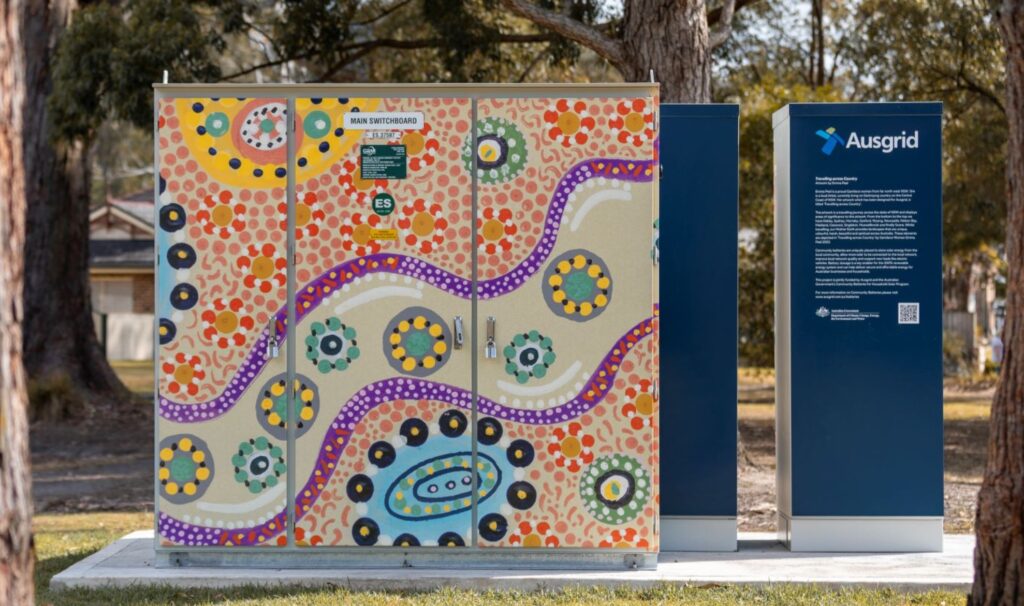
The 100% tried and proven global solution is to build community batteries in each street or locale and use excess solar energy to charge these, so they can power neighbourhoods during peak loads. Logical, but that does not appear to sway the government.
No, the government prefers to have us spend our hard-earned money and become mini-generators. It’s Robbing Hood all over again.
The entire electricity supply industry is a cess-pool of vested interests with one aim – to make maximum money for shareholders at our cost.
Benefits of community batteries
- Allows more rooftop solar and electric devices, such as electric vehicle chargers, to be connected without expensive network upgrades.
- Strengthens the grid and reduces the need to limit (curtail) solar exports. This helps customers maximise their solar investment.
- Helps explore new models that share more electricity produced from solar panels within the local area, including households without solar panels.
- Creates a positive impact on wholesale electricity prices that could eventually flow through to reduced retail electricity prices.
- Helps to regulate voltage on the network and improves network quality in the local area.
- Reduces reliance on traditional poles and wires investment and helps lower network costs.
- Access to an online information hub where the community can see how much energy was stored and used daily.